
Raleigh, NC, Jun. 9, 2026 — Wake County commissioners spent hours Monday wrestling with a question that could shape healthcare across the region for decades: can WakeMed remain the community-focused hospital system residents know while giving up its status as a fully independent health system?
That question sat at the center of a lengthy work session devoted entirely to WakeMed’s proposed strategic combination with Atrium Health. WakeMed executives, board members, and Atrium leadership argued the partnership is necessary to secure the hospital system’s future, while commissioners repeatedly returned to concerns about local control, healthcare costs, accountability, and what Wake County would be surrendering in exchange for a promised $2 billion investment.
Document: WakeMed/Atrium Health: Building a Better Future Together for Care and Access in Wake County
WakeMed leaders made clear they did not arrive at the proposal quickly. WakeMed Board Chair Dr. Thad McDonald described more than two years of due diligence that began after Atrium emerged as the lone in-state respondent to a 2022 oncology partnership request. As discussions expanded, WakeMed’s board focused on three fundamental questions: what the future holds for safety-net hospitals, whether WakeMed could independently finance its long-term growth plans and facility needs, and whether Atrium represented the right cultural and strategic fit. According to McDonald, the board ultimately concluded that remaining completely independent would make it increasingly difficult to meet future community needs while continuing to invest in aging facilities and new services.
The argument WakeMed presented was less about current financial distress than future realities. Executives emphasized that WakeMed remains financially stable today but faces the same pressures facing hospitals nationwide: rising labor costs, escalating pharmaceutical expenses, supply chain inflation, reimbursement challenges, and growing competition. McDonald said the board determined that the capital required to execute WakeMed’s strategic vision exceeded what the organization could realistically generate on its own, leading directors to conclude that a larger partner would eventually be necessary.
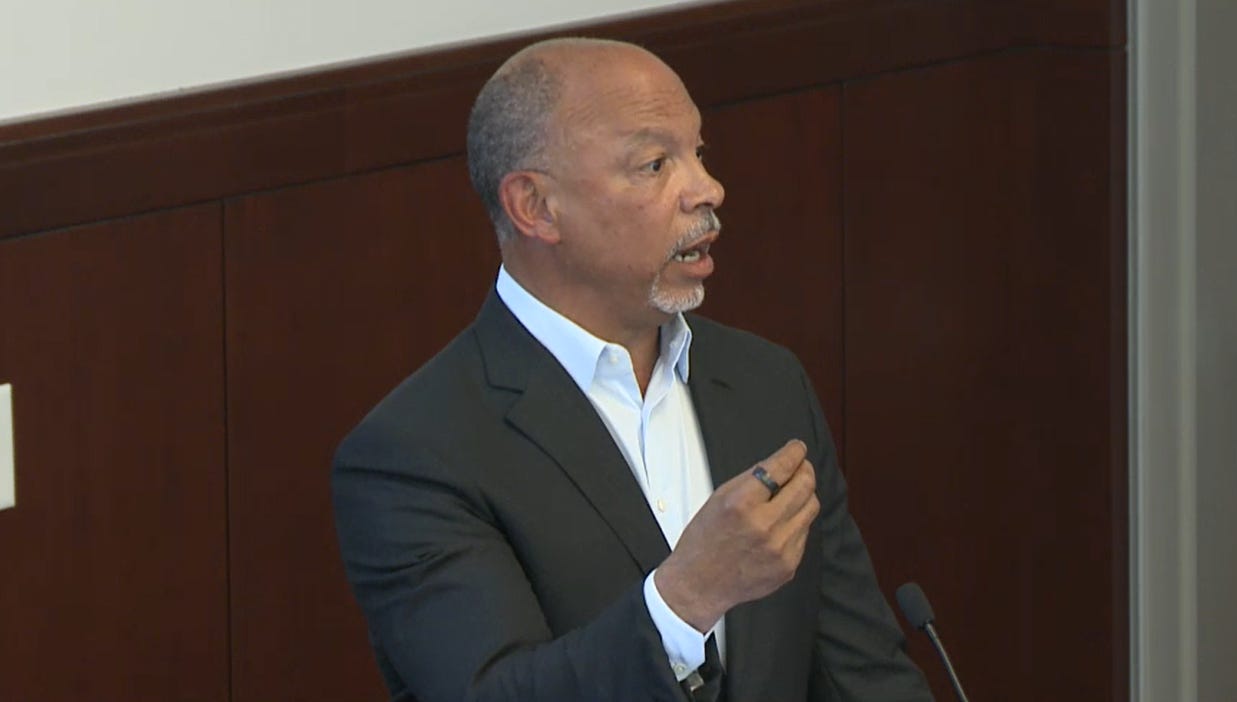
Atrium and Advocate Health CEO Gene Woods reinforced that message, describing healthcare as an industry undergoing rapid transformation. He argued that scale has become increasingly important as hospitals absorb inflation while continuing to serve patients covered by Medicare, Medicaid, and charity-care programs. Woods said larger systems can spread costs across broader operations, invest in technology and clinical innovation, and sustain community programs that smaller organizations may struggle to maintain over time.
For many Wake County residents, the proposal also raises a basic question: who exactly is Atrium Health? Woods told commissioners that Atrium is part of Advocate Health, a nonprofit healthcare system formed through a series of combinations involving Atrium Health, Advocate Health Care, Aurora Health Care, and Wake Forest Baptist Health. The system operates 69 hospitals, serves roughly six million patients annually, employs approximately 172,000 people, and reported $6.2 billion in community benefits in 2025. Atrium leaders described their model as one built around local governance, community-based boards, behavioral health investment, medical education, clinical research, and the expansion of access to care in both urban and rural communities.
Atrium’s leaders spent considerable time highlighting those community investments. Woods pointed to the system’s behavioral-health infrastructure, including psychiatric hospitals, mental-health beds, virtual behavioral-health services, and school-based healthcare programs. He also described investments in affordable housing, food security, violence-intervention programs, rural healthcare, and clinical research, arguing that healthcare systems must address the social and economic conditions that influence health outcomes, rather than simply treating patients once they arrive at a hospital.
At the center of WakeMed’s proposal is a commitment to invest $2 billion in Wake County over the next decade. According to presentation materials, those investments would include redevelopment and expansion of the aging Raleigh campus on New Bern Avenue, additional inpatient beds and services at Cary Hospital and North Hospital, continued development of the Garner Whole Health Campus, two new Healthplex facilities with standalone emergency departments, expansion of specialty-care programs, statewide virtual-care capabilities and infrastructure projects tied to the Wake III partnership and the Health and Education District in southeast Raleigh.
WakeMed leaders repeatedly linked those projects to broader community needs. Board Vice Chair Margaret Bratton highlighted opportunities to expand mental health services, strengthen support for WakeBrook, accelerate the development of the Garner Whole Health Campus, and increase services for vulnerable populations. She pointed to Atrium’s virtual-care network as one of the most transformative opportunities available through the partnership, describing it as a way to remove transportation barriers, improve access to care, and expand mental-health services for students and families.
Still, the discussion repeatedly returned to what WakeMed would lose.

Under the proposed structure, Atrium Health would become WakeMed’s sole corporate member. WakeMed would remain a nonprofit organization and continue operating as a community hospital, but it would no longer function as a fully independent health system. The future board would consist of eight Wake County-nominated directors who must live in Wake County and six directors appointed by Atrium Health. WakeMed leaders characterized the arrangement as a balance between obtaining the benefits of a larger system and preserving local oversight.
“We recognized that we would lose full governance autonomy while retaining local control,” Bratton told commissioners.
That distinction became one of the central themes of the meeting. WakeMed officials argued that community accountability would remain protected through governance provisions, public board meetings, annual reporting requirements, and longstanding agreements with Wake County. They also emphasized that charity-care obligations would remain in force. Board Secretary Mary Nash Rusher noted that provisions dating back to WakeMed’s transfer agreement with the county would continue to require operation as a community hospital and maintenance of charity-care commitments, with reversion language allowing the hospital to return to county control if those obligations are not met.
Commissioners, however, pushed beyond governance structures and focused on practical impacts residents would feel.
One recurring concern involved healthcare costs. Commissioners raised questions about whether joining a larger health system could eventually lead to higher patient costs. WakeMed CEO Donald Gintzig responded that healthcare costs are already rising due to inflation, labor costs, and pharmaceutical pricing. He argued that greater scale would help contain those pressures through purchasing power, technology investments, and operational efficiencies rather than amplify them.
“Our costs are going up every day,” Gintzig said while explaining the financial pressures facing hospitals.
Gintzig also challenged the assumption that larger systems automatically lead to higher patient costs, noting that insurance premiums have risen even during years when WakeMed received little or no reimbursement increases from insurers. He argued that the larger challenge is reducing healthcare delivery costs while maintaining access and quality.
Questions also arose regarding alternative options, particularly UNC Health’s public interest in pursuing a transaction with WakeMed. Commissioners asked whether WakeMed remained free to negotiate with other parties. Hospital leaders responded that the organization had already selected a partner based on mission alignment, culture, commitment to charity care, quality, and local governance considerations rather than conducting what they viewed as a traditional sale process.
Workforce issues generated another significant portion of the discussion. WakeMed’s presentation stated that the combination would not result in layoffs at closing and projected the creation of more than 3,300 jobs over five years. Leaders said integration would occur gradually, employee years of service would be preserved, and additional educational opportunities would become available through Wake Forest University School of Medicine and the broader Atrium network.
Mental health remained a recurring topic throughout the session. Atrium highlighted investments in psychiatric hospitals, behavioral health services, school-based virtual care, affordable housing, violence prevention, and food security programs. WakeMed leaders argued that access to those resources would strengthen efforts already underway in Wake County and allow expansion of services that are difficult to fund at the scale currently required.
By the end of the discussion, the debate had crystallized around a question larger than any single project, facility expansion, or governance provision. WakeMed’s leaders contend that remaining independent means shouldering the growing financial and operational demands of modern healthcare alone. The Atrium combination, they argue, offers capital, scale, and expertise that would be difficult to replicate independently while preserving the hospital’s nonprofit mission and community focus.
Whether commissioners ultimately agree may depend on whether they believe WakeMed can remain WakeMed after it is no longer standing on its own.
“This was a board decision and second only to its founding, the most important decision our board would ever make,” McDonald told commissioners.