
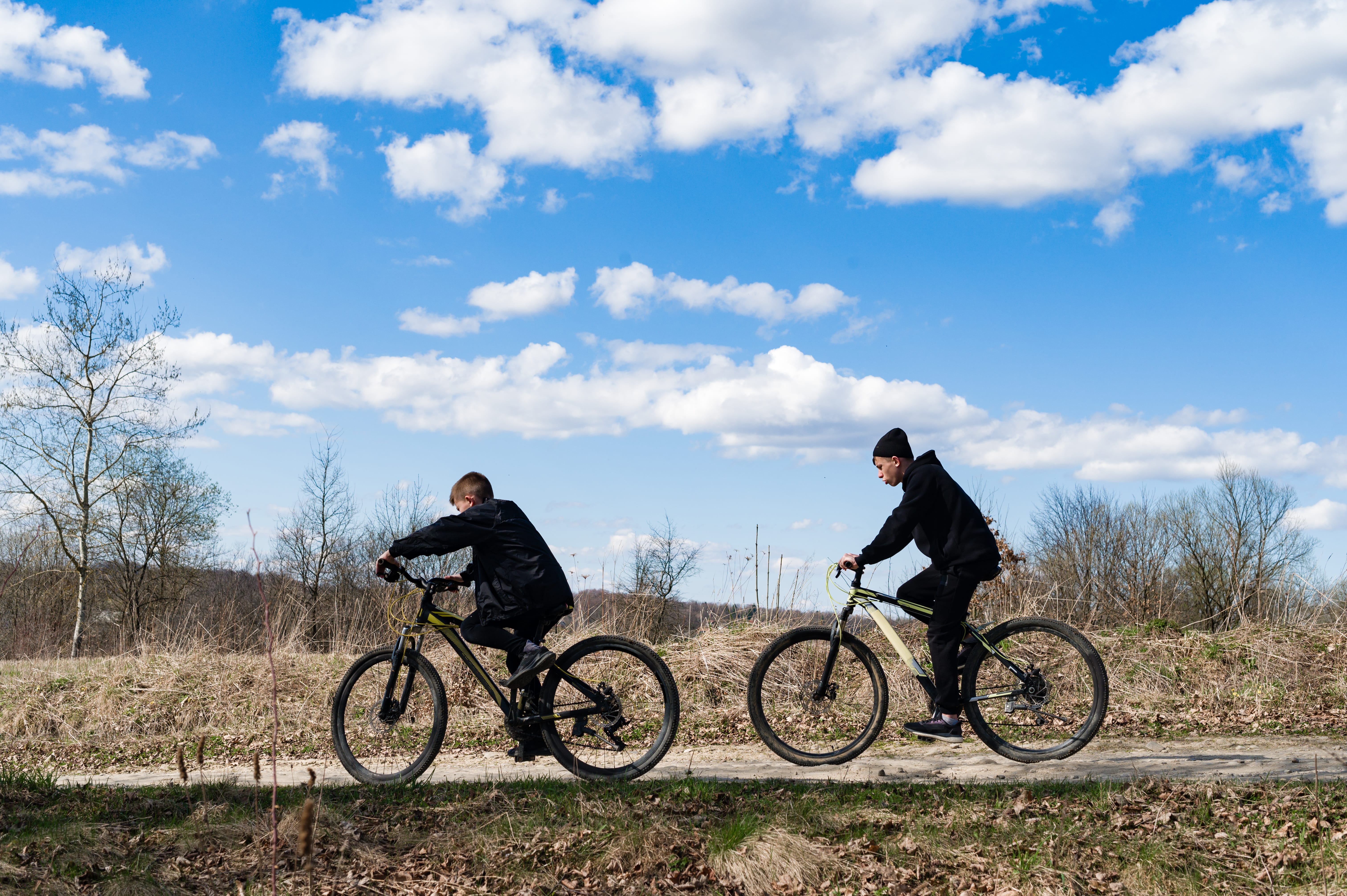
Holly Springs, NC, Mar. 25, 2026 — Growing up, my two brothers and I would spend hours riding our bikes, exploring places we’d never been, and pushing our boundaries a little farther each day. There was no real plan beyond seeing what was around the next corner. A trail would turn into a neighborhood. A neighborhood would lead to a field. And somehow, we always found our way back.
That wasn’t unusual at the time. Sometimes friends joined us, sometimes they didn’t. We roamed. It was what we did. And our parents knew it.
Looking back, what stands out isn’t just the freedom. It’s how unremarkable that freedom felt. No one questioned it. No one viewed it as risky or unusual. It was simply part of growing up.
Today, that same kind of experience feels different.
Not because children have changed, but because the way we see the world around them has.
By most measurable standards, children today are safer than they were a generation ago. Violent crime has declined over time, and the scenarios that tend to dominate parental fears, particularly stranger abductions, remain extraordinarily rare. Yet the emotional reality tells a different story. Parents are more aware of those possibilities than ever before, and that awareness shapes how decisions are made.
Information now moves differently. News cycles, social media, and neighborhood platforms deliver a constant stream of incidents, often dramatic and often far removed from our own communities. The human brain does not naturally separate what is common from what is simply visible. When the same types of stories recur, they begin to feel representative, even when they are not.
Over time, that shift in perception changes behavior. Parents are not reacting to what is most likely to happen, but to what feels possible, and what would feel impossible to live with if it did. The result is a quiet but meaningful change in how childhood unfolds. More supervision. More structure. Less independence.
You can see it if you look for it. Neighborhood streets are quieter. Parks are less likely to be filled with kids moving about on their own. What was once ordinary now feels less so.
But fear alone doesn’t explain it.
There is a second layer that has taken hold, one that parents don’t always talk about directly. The question is no longer just whether something is safe. It’s whether it will be seen as safe by someone else.
Would another adult step in? Would they question it? Would they make a call?
In different parts of the country, those questions have become very real. Parents have been reported or investigated for allowing children to walk alone or play without direct supervision. In many cases, those situations were not about harm, but about differing views of what is acceptable.
That possibility changes the equation. Even parents who believe in giving their children independence may hesitate, not because they’ve changed their minds, but because the consequences of being challenged have grown.
And that hesitation feeds on itself.
As fewer kids are allowed to move freely, fewer are visible in public spaces. As those spaces become quieter, they begin to feel less safe, regardless of actual conditions. That perception leads to even more caution, and the cycle continues.
What gets lost in that cycle is harder to measure but no less important. Independence is how kids learn to make decisions, solve problems, and build confidence without immediate adult guidance. Those experiences don’t happen the same way in structured environments, no matter how well-intentioned they are.
This isn’t about suggesting there are no risks or that every child should be given the same level of freedom. Every family makes those decisions differently. But it is worth recognizing how much the boundaries of what feels normal have shifted, and how much of that shift is driven by perception rather than reality.
In many communities, neighborhoods are built around parks, greenways, and connected spaces meant to be used and explored. They were designed for movement, for access, and for shared experience. Yet the way they are actually used today feels different.
Today, that same ride I took with my brothers would feel different. What once felt like discovery, adventure, and simple fun is now more likely to be viewed through a different lens: guarded, potentially dangerous, maybe even out of bounds.
The path itself hasn’t changed.
But the way we see it has.
About the Author
Christian A. Hendricks is the publisher and founder of Holly Springs Update, a local news publication covering Holly Springs, NC, and its surrounding area. From time to time, he shares his views on national, regional, and state issues. He can be reached via email at christian.hendricks@hollyspringsupdate.com.