
Raleigh, NC, Mar. 30, 2026 — Wake County commissioners opened the 2027 budget process today with a single-item work session focused on the county’s operating budget and capital debt landscape, but the tone inside the room made clear this was not a routine kickoff. The agenda itself was narrow, covering economic indicators, revenue forecasts, expenditure considerations, a multi-year forecast, and capital debt funding, but the discussion quickly signaled that the financial environment heading into 2027 is more constrained than in recent years.
Staff framed the meeting as the formal start of budget season, telling commissioners, “Welcome officially to your budget season,” while also noting that the conversation had already been building over prior briefings. The message was that this session was not about decisions yet, but about setting expectations for a budget cycle shaped by slower revenue growth and rising demands.
Economic strength remains, but uncertainty is driving caution
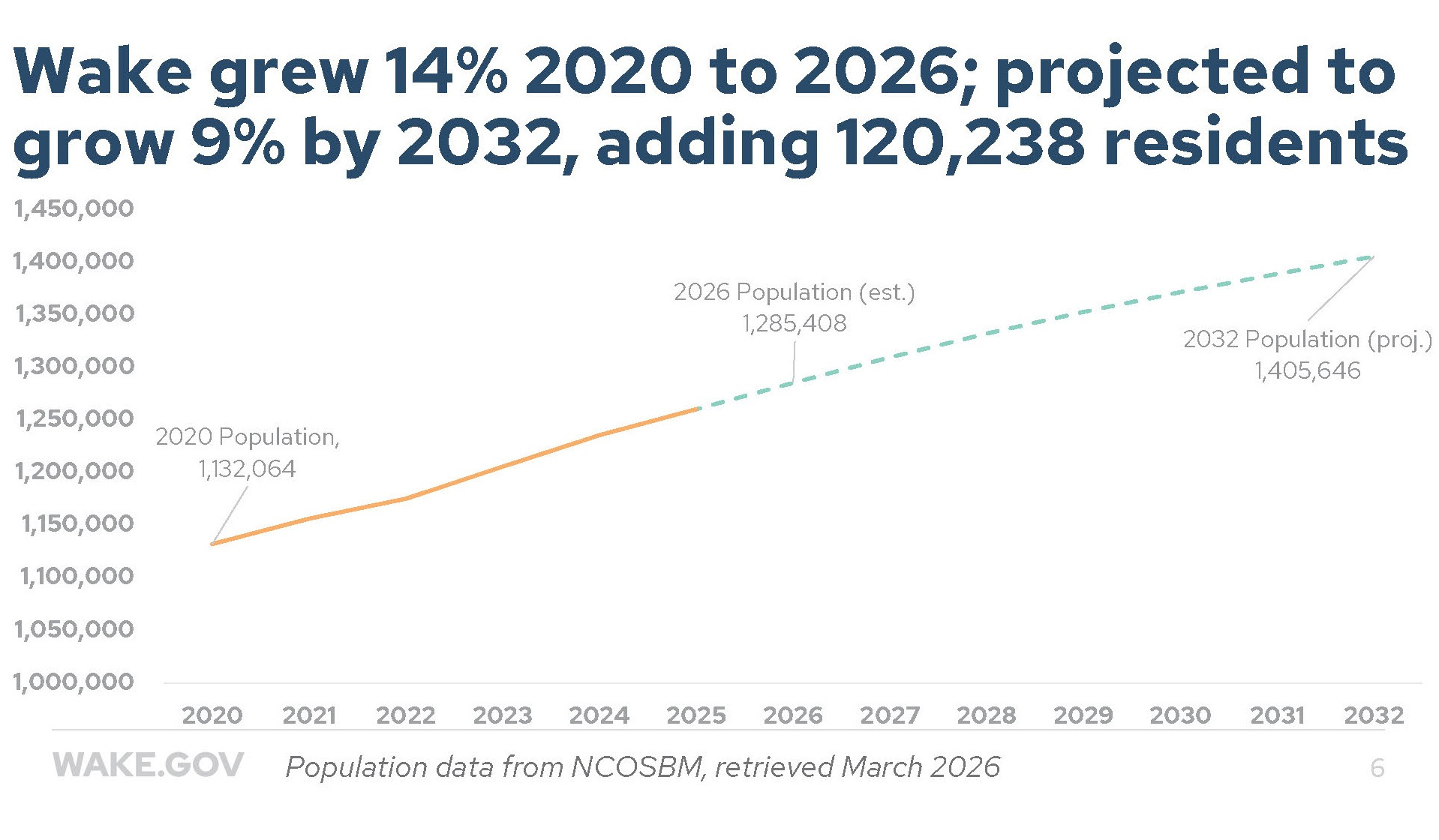
On paper, several of Wake County’s economic indicators remain strong. The presentation showed inflation at 2.4% in February 2026, down from 2.8% the year prior, along with income levels that continue to outpace state and national averages. Population growth also remains a defining factor, with the county estimated at 1,285,408 residents in 2026 and projected to reach 1,405,646 by 2032, an increase of more than 120,000 residents.
But those positive indicators were repeatedly paired with caution. Staff pointed to continued tariffs, stock market volatility, and a broader sense of economic uncertainty. More importantly, commissioners heard that residents are not experiencing the economy uniformly. Some households remain stable, while others are facing increased pressure, a dynamic that complicates how the county plans services and allocates resources.
Growth is shifting, and so are service demands
The county’s growth is not just continuing, it is changing. Between 2020 and 2024, 43% of Wake County’s population increase came from residents over the age of 55, adding more than 44,000 people in that age group. That shift has direct implications for services, including increased demand for adult protective services and other forms of community support.
At the same time, development patterns are evolving. Residential permit activity has begun to level off after several years of strong growth, prompting commissioners to ask whether external factors, such as tariffs or construction costs, are beginning to slow housing production. Rural preservation efforts also remain part of the equation, with thousands of acres enrolled in agricultural districts and conservation programs, highlighting the tension between growth and land preservation.
Commissioners pressed for clearer data on community need
While staff presented a broad picture of growth and economic conditions, commissioners pushed for a more detailed understanding of who is being served and how needs are changing. Several commissioners asked for deeper data on vulnerable populations, including poverty trends and service utilization. One example cited during the discussion was Medicaid participation, with roughly 220,000 Wake County residents receiving coverage, including about 100,000 children.
That line of questioning led to a broader point. Commissioners want to see measurable evidence that demand for services is increasing, not just anecdotal descriptions. Staff responded that rising needs are evident across departments, including EMS calls, human services applications, and use of parks and libraries, but acknowledged the importance of presenting that data more clearly as the budget process moves forward.
Homelessness remains a visible and complex challenge
The discussion also touched on homelessness, with data showing an increase in the average length of time individuals remain homeless, rising from 485 days in 2023 to 603 days in 2025. Average shelter stays also increased modestly over that period. While those figures point to ongoing challenges, commissioners raised questions about whether the data fully reflects what is happening on the ground.
Some expressed concern that the numbers may not capture the full scope of need, particularly among individuals and families newly at risk due to rising living costs. At the same time, there was recognition that improvements in measuring homelessness could lead to more accurate data in future reporting.
A redesigned budget process reflects tighter conditions
A significant portion of the work session focused on how the county is now building its budget. The process is more structured than in prior years, beginning with strategic plan alignment and moving through department business plans, internal review, and a series of work sessions leading up to the manager’s recommended budget.
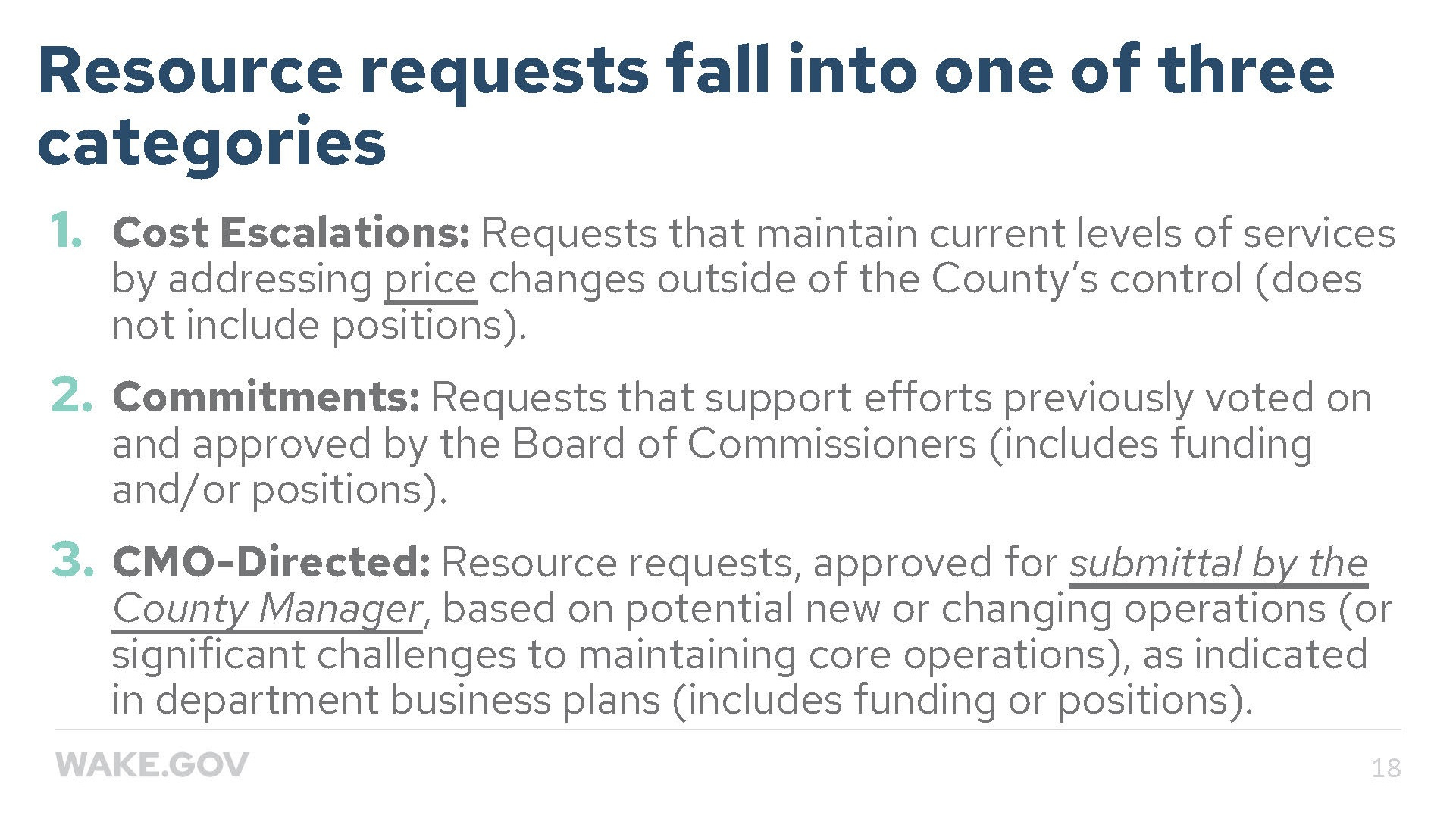
Department requests are now grouped into three categories: cost escalations, ongoing commitments, and county-manager-directed priorities. That structure prompted immediate questions from commissioners, particularly around how long commitments remain in place and how unfunded mandates are being tracked. Several commissioners called for a clearer accounting of those mandates and their impact on the property tax rate, signaling that this will be a key issue as the budget develops.
Revenue growth is slowing, and that is reshaping the conversation
At the center of the discussion was a more constrained revenue outlook. The county is projecting total revenue growth of about 1.2% annually over the next three years, equating to roughly $78 million in new revenue from 2027 through 2029, or about $26 million per year. Property and sales taxes continue to dominate the General Fund, accounting for 89% of total revenue, with property taxes alone making up 75%.
However, growth in property tax revenue is expected to slow due to factors such as appeals, exemptions, and deferred values. Sales tax revenue is projected to remain relatively flat year over year, with recent performance described as uneven. Taken together, these trends point to a budget environment with less new revenue to absorb rising costs.
A slight revenue decline highlights underlying pressure
One of the more notable data points presented was a projected 0.4% decline in total revenue from 2026 to 2027, dropping from approximately $2.169 billion to $2.159 billion. This decline is not driven by falling property or sales tax collections, both of which are expected to increase modestly. Instead, it reflects the county’s decision not to rely on the $35.1 million in behavioral health fund balance used in the prior year.
That decision sparked discussion among commissioners about the nature of those funds and whether they are restricted or could be reconsidered in future budgets. The exchange underscored how one-time funding sources can mask underlying structural gaps between revenues and expenditures.
Expenditures continue to outpace revenue
Even with a more disciplined budgeting process, projected expenditure growth remains well above revenue growth. Depending on the scenario, expenditures are expected to increase between 3.7% and 4.7%, creating a persistent gap that must be addressed through prioritization, reductions, or other adjustments.
That reality was acknowledged directly during the meeting. Commissioners described the outlook as “frightening,” and county leadership made clear that this budget cycle will require difficult choices. The county manager noted that this could be the tightest budget to finalize in years, with limited room for discretionary spending and a need to scrutinize every request.
Education and capital needs continue to drive long-term costs
Education remains a central component of both operating and capital spending. County support for Wake County Public Schools has grown significantly over time, and enrollment trends continue to influence funding needs. At the same time, commissioners sought more clarity on how charter school funding is calculated and how overall education funding is communicated to the public.
On the capital side, debt and infrastructure investments represent a major share of the budget. Transfers to the debt and capital accounts for 25% of the 2026 budget, with the majority supporting school-related projects. Long-term plans include billions in school construction and renovation, as well as major county projects such as a detention center expansion, an animal shelter, and other facilities. These investments are expected to be supported in part by future bond referendums, which may have tax implications for residents.
A budget year defined by tighter choices
No decisions were made during this session, and none were expected. But the discussion made clear that Wake County is entering the 2027 budget process with less flexibility than in recent years. Commissioners are asking for more detailed data, clearer accountability, and a stronger understanding of community need, all while facing slower revenue growth and rising costs.
The result is a budget season that will likely center on tradeoffs. The framework presented in this first work session sets the stage for those decisions, with future meetings expected to bring more detailed proposals, sharper debates, and ultimately choices that will define what the county prioritizes in a more constrained financial environment.