
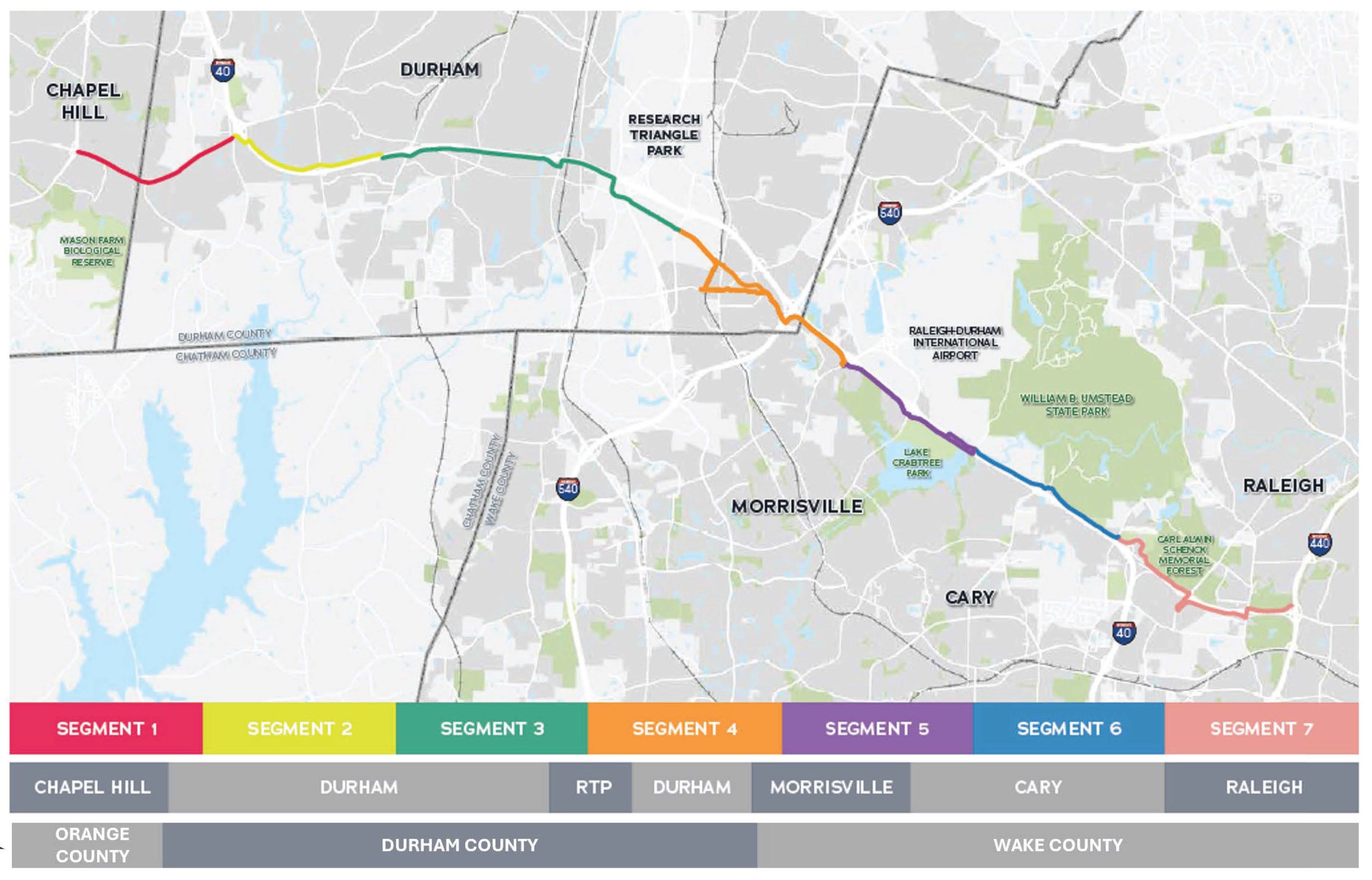
Raleigh, NC, Mar. 24, 2026 — A long-envisioned effort to connect Research Triangle Park to Raleigh through a continuous network of trails is moving forward, with Wake County leaders outlining early design work and next steps for what is known as the Triangle Bikeway.
The project, presented on Monday to the Board of Commissioners’ Growth, Sustainability and Economic Strength Committee, is designed to create a regional corridor that links employment centers, neighborhoods, parks, and transit routes across the western and central parts of the county.
At its core, the Triangle Bikeway is less a single trail than a connected system. Plans call for connecting existing greenways and building new segments to allow cyclists and pedestrians to travel between RTP, Cary, and Raleigh with minimal interruptions. Along the way, the corridor would connect to destinations including Raleigh-Durham International Airport, NC State University, Umstead State Park, and the broader Capital Area Greenway system.
County staff described the project as both a mobility and quality-of-life investment, one that could provide an alternative to short car trips while expanding access to recreation and outdoor space. The corridor is also intended to integrate with existing and planned transit routes, creating more options for residents to move between where they live and where they work.
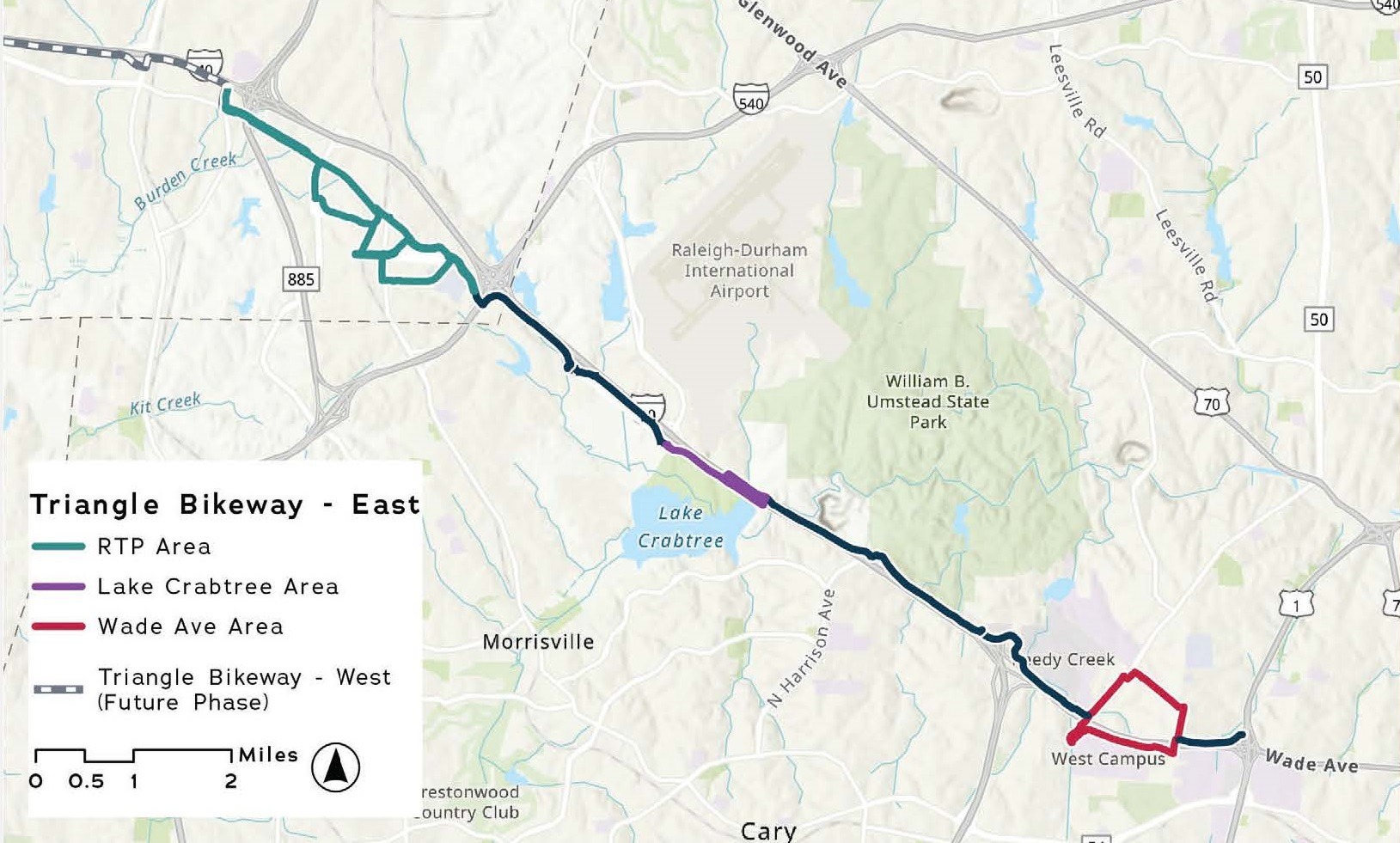
The presentation highlighted a series of east-west connections that would serve as the backbone of the system, linking trails such as Walnut Creek, Crabtree Creek, and the American Tobacco Trail. Those connections are expected to play a key role in turning what are now isolated segments into a more cohesive regional network.
The effort is being coordinated across multiple agencies and jurisdictions, reflecting the project's geographic scope. Wake County is working in partnership with the Research Triangle Foundation, the Capital Area Metropolitan Planning Organization, the North Carolina Department of Transportation, and local municipalities to align planning, funding, and implementation.
That coordination is critical, as much of the proposed route crosses jurisdictional boundaries and relies on a mix of existing infrastructure and new construction. Officials said the current phase focuses on design guidance, identifying priority segments, and establishing a framework for how the project can move forward over time.
While no construction timeline was finalized, the discussion made clear that the Triangle Bikeway is a long-term effort that will depend on sustained funding and continued collaboration among partners.
For residents, the potential impact is both practical and aspirational. In the near term, the project could expand access to trails and improve connections between communities that are already growing closer together. Over the longer term, it represents a shift in how the region thinks about mobility, offering an alternative to driving for some trips and reinforcing the Triangle’s identity as a place where outdoor access is part of daily life.
No formal action was taken during the meeting, but the update signaled steady progress on a project that has been discussed for years. As planning continues, the challenge will be to turn that vision into a connected system that residents can use, not just for recreation but also as a viable way to move through one of North Carolina’s fastest-growing regions.