
Holly Springs, NC, Mar. 17, 2026 — Most Americans rarely think about national security in their daily lives. Cargo ships move across oceans, airlines cross continents, and energy flows through global markets largely without interruption. In short, the world’s economic plumbing works, and it works so reliably that it is easy to take for granted.
Much of that stability exists because the United States has spent decades building and maintaining the world’s most powerful military, along with alliances designed to deter conflict before it begins. That system has largely succeeded, but it has never been inexpensive.
As Washington debates defense budgets approaching, or potentially exceeding, $1 trillion per year, a broader question is beginning to surface. It is a question that rarely arises during periods of stability but becomes unavoidable when global tensions rise, and it sits at the center of an increasingly important national conversation.
What does security actually cost?
A Military Built for a Global Role
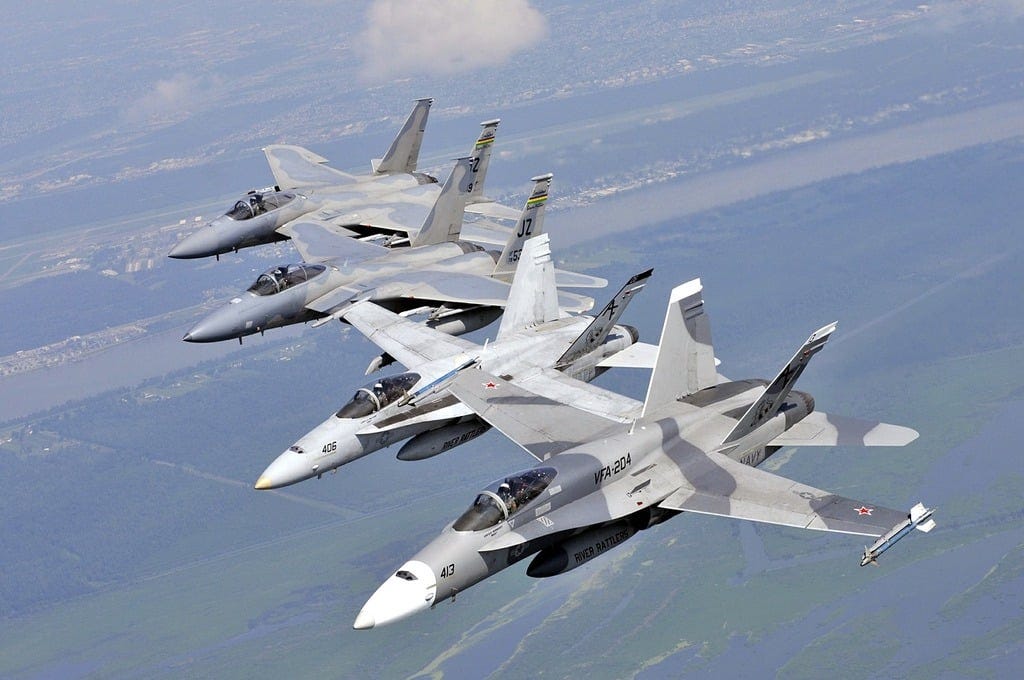
The United States currently spends roughly $900 billion annually on defense, far more than any other country and roughly 40 percent of total global military spending. That scale means Washington spends more on its military than the next several countries combined, reflecting not just national defense priorities but a long-standing global role.
That budget supports a military designed to operate well beyond U.S. borders. It funds personnel, ships, aircraft, tanks, satellites, and advanced weapons systems, along with the intelligence networks and logistics required to respond quickly to crises anywhere in the world. For decades, policymakers have operated under a consistent premise that deterring conflict abroad reduces the likelihood of conflict at home.
Put in more tangible terms, that spending equals roughly $2,700 per American each year, or about $7,000 per household, a figure that helps translate a trillion-dollar discussion into something closer to home and easier to understand.
$2,700 Per American
America spends roughly $2,700 per resident each year on defense.
Alliances That Spread the Cost
One reason the United States has been able to sustain such a global presence without even higher costs is that it rarely acts alone. Organizations such as the North Atlantic Treaty Organization, along with long-standing partnerships with countries like Japan, South Korea, and Australia, distribute both responsibility and risk across a broader coalition.
These alliances allow the United States to extend its reach without bearing every cost directly. Allies host bases, contribute military forces, and share intelligence, collectively spending hundreds of billions of dollars on defense. Strategists often refer to this network as a “force multiplier,” reflecting how shared commitments can expand capabilities while reducing the burden on any single nation.
A Changing Conversation in Washington
That model, however, may be shifting as policymakers increasingly debate whether allies should take on a larger share of global security costs. This conversation has intensified alongside rising geopolitical tensions and growing fiscal pressure within the United States.
Donald Trump has proposed increasing the U.S. defense budget to roughly $1.5 trillion by 2027, bringing military spending closer to 5% of the nation’s economy. While it remains unclear whether that proposal will become policy, it signals a broader shift in how leaders think about the scale and structure of U.S. security commitments.
Who Protects the World’s Shipping Lanes?
That shift is already visible in how policymakers are discussing responsibility for global stability, particularly around critical chokepoints such as the Strait of Hormuz. Roughly one-fifth of the world’s oil supply moves through this narrow passage between Iran and Oman, making it one of the most strategically important waterways in the global economy.
For decades, the United States Navy, primarily through the U.S. Fifth Fleet, has played a leading role in securing that passage. Recent comments from President Trump suggest that this arrangement may be under reconsideration, with a growing expectation that countries benefiting from global trade routes should contribute more directly to their protection.
At its core, the issue raises a fundamental question about shared responsibility. If the global economy depends on stability, determining who pays to maintain that stability becomes increasingly difficult as costs rise.
The Cost of Conflict
The financial implications become even clearer when conflict enters the equation. While defense budgets reflect the ongoing cost of preparedness, actual military operations can increase spending almost immediately and at a significant scale.
Early estimates from the Center for Strategic and International Studies suggest that recent U.S. military operations involving Iran are costing roughly $891 million per day. These estimates include munitions replacement, operational support, and the deployment of high-end assets such as stealth aircraft and carrier strike groups.
At that pace, a single month of sustained combat could exceed $25 billion, demonstrating how quickly costs can escalate beyond baseline defense spending. The distinction is important, as the military budget represents the cost of readiness, whereas war itself entails an entirely different order of financial commitment.
The Fiscal Reality
All of these pressures exist within the broader framework of the federal budget, where defense is only one part of a much larger financial picture. Federal spending today is concentrated in a handful of major categories, including Social Security, Medicare, Medicaid, national defense, and interest payments on the national debt.
Defense accounts for roughly 13 percent of total federal spending, placing it below Social Security but roughly in line with Medicare. This positioning highlights the challenge facing policymakers, since increasing spending in one area almost always requires tradeoffs in another.
The Debt Factor
Those tradeoffs are becoming more pronounced as federal debt approaches $39 trillion, a level that has grown significantly over the past decade. As borrowing has increased, so has the cost of servicing that debt, with interest payments projected to approach $1 trillion annually.
That figure now sits in roughly the same range as total U.S. defense spending, creating a new dynamic in federal budgeting. Unlike defense or infrastructure investments, interest payments do not produce services or long-term assets; instead, they reflect the cumulative cost of prior fiscal decisions.
As these obligations grow, they reduce the government’s flexibility and increase the pressure on future spending decisions. In practical terms, this means that new investments in security may increasingly compete with existing financial commitments.
The Tradeoffs Ahead
Historically, the United States has devoted a larger share of its economy to defense than it does today. During the Cold War, military spending often exceeded six percent of GDP, compared with roughly three to three-and-a-half percent today.
Despite that decline as a share of the economy, current defense spending remains at historically high levels in absolute terms. If spending continues to rise, policymakers will face a narrowing set of choices, including raising taxes, reducing other programs, borrowing additional funds, or relying on economic growth to offset the increase.
Each of these options carries meaningful consequences, and none offers an easy or universally accepted solution.
What Comes Next
For decades, the United States has supported a global security system that underpins trade, deters conflict, and sustains economic stability. That system has delivered substantial benefits, but it has also required sustained investment and long-term commitment.
As defense spending, entitlement programs, and interest payments all grow simultaneously, the country may be approaching a point at which those costs can no longer be deferred. The convergence of these pressures is beginning to reshape how policymakers and the public think about the price of stability.
Security rarely draws attention when it works, but when it falters, the consequences become visible quickly. As those realities come into sharper focus, Americans may soon face a question that has long remained in the background.
How much stability is the nation willing to pay for, and who ultimately pays the bill?
About the Author
Christian A. Hendricks is the publisher and founder of Holly Springs Update, a local news publication covering Holly Springs, NC, and its surrounding area. From time to time, he shares his views on national, regional, and state issues. He can be reached via email at christian.hendricks@hollyspringsupdate.com.