
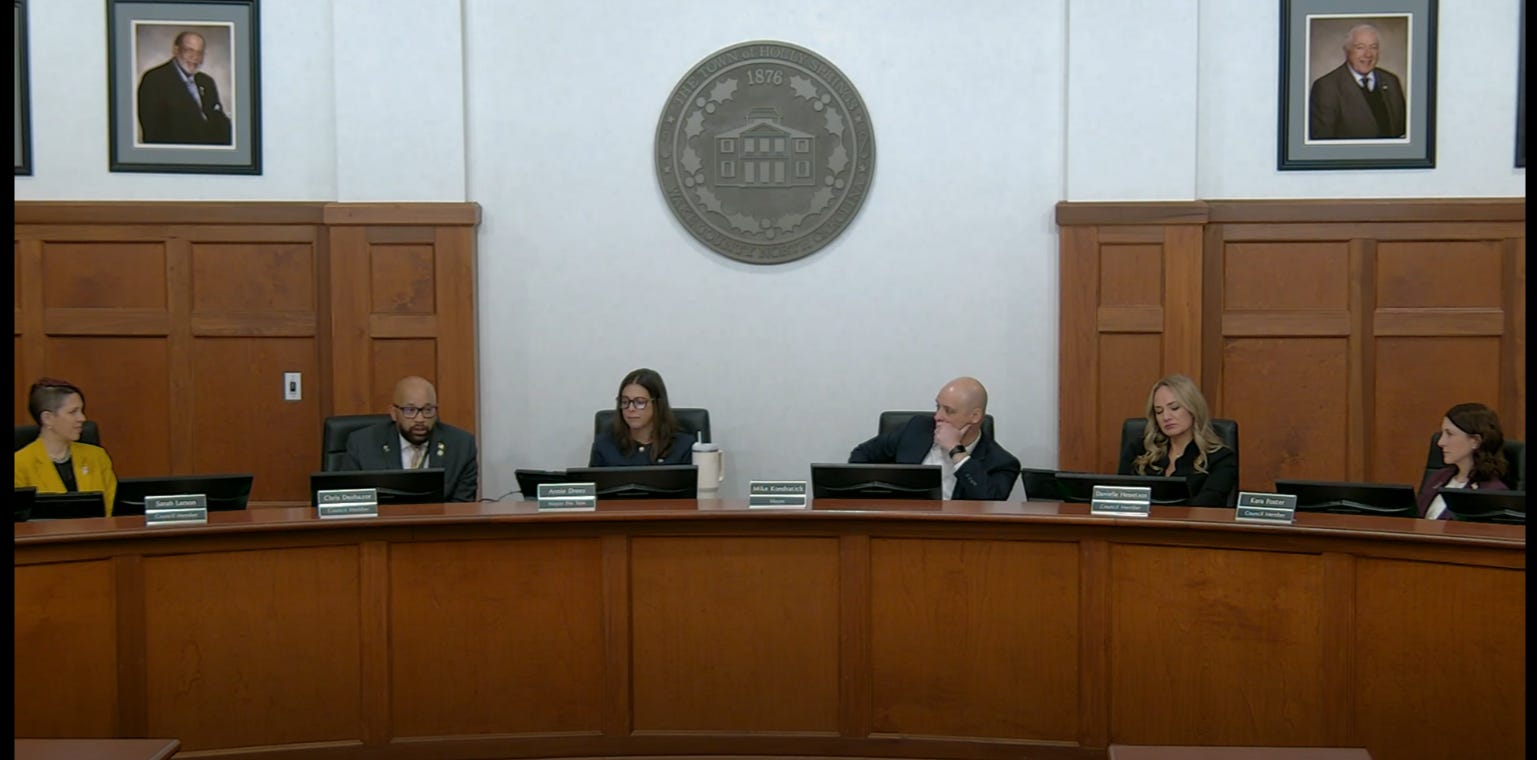
Holly Springs, NC, Jan. 21, 2025 — Public comments at Tuesday’s Town Council meeting focused on development oversight, water supply planning, and the role of elected officials. Public comments were followed by multiple community proclamations and a wide-ranging Town Manager’s report covering public safety, infrastructure, and upcoming town initiatives.
Concerns Raised About Development Oversight
During the public comment period, a resident addressed the council regarding the town’s development review process, emphasizing the responsibility of elected officials to independently evaluate proposals and uphold their oath of office.
The speaker referenced the Mira Ridge development as an example of how projects can evolve significantly before reaching the public. The proposal, which initially included fewer units, later increased in density before returning to a lower total following resident feedback. The comment questioned why proposals undergo extended staff-level review before being presented publicly and urged greater transparency earlier in the process.
The resident also emphasized the importance of council members fully understanding ordinances, policies, and development implications before voting, noting that residents often feel disconnected from decisions that have already been shaped prior to public hearings.
Water Supply and Growth Concerns Raised
A second resident addressed the council regarding the proposed expansion of the Utley Creek Water Reclamation Facility, framing the issue as a long-term growth decision rather than a routine infrastructure upgrade.
The speaker noted that wastewater treatment capacity directly affects development potential and raised concerns about regional water availability, particularly related to Jordan Lake. The comment cautioned that expanding treatment capacity without fully addressing long-term water supply could place future councils in difficult positions and contribute to overdevelopment.
The resident emphasized that infrastructure decisions of this scale represent policy choices that require careful oversight by elected officials, rather than purely technical approvals.
Written Public Comments Entered Into Record
Town staff confirmed receipt of several written public comments, including:
Concerns related to noise in the 12 Oaks area
Requests for extended business hours during holiday periods
Multiple comments regarding e-bike use near the 12 Oaks community
All comments were entered into the official record.
As per meeting protocol, council members did not directly address issues or questions raised by residents during the allotted time for public comments.
Council Issues Three Proclamations
Following public comment, the Town Council issued three proclamations recognizing community observances and awareness efforts.
The council proclaimed Martin Luther King Jr. Day, recognizing local events and service activities held in honor of Dr. King’s legacy and emphasizing the importance of civic engagement and community service.
A second proclamation recognized Black History Month, highlighting its significance as a time to reflect on the history, achievements, and contributions of Black Americans at both the local and national levels.
The council also issued a proclamation designating Human Trafficking Prevention Month, calling attention to the importance of awareness, education, and prevention efforts related to human trafficking and the role communities play in identifying and addressing the issue.
Other Business: Community Updates and Reflections
During the Other Business portion of the meeting, council members shared several updates and reflections.
Several members thanked town staff for their work on recent initiatives, including coordination related to a major corporate expansion announcement and community programming. Council members also spoke about the importance of collaboration between residents, boards, and town leadership.
Ongoing concerns related to e-bike safety were discussed, with council members noting that the issue has been raised by advisory committees and residents alike. Parents and riders were encouraged to follow traffic laws and safety practices as the town continues to evaluate potential next steps.
Council members also reflected on the significance of Martin Luther King Jr. Day, encouraging residents to engage with its broader message and apply its lessons through continued civic involvement.
Town Manager’s Report Highlights Weather Preparedness and Planning
Town Manager Randy Harrington provided several operational updates, beginning with preparations for potential winter weather.
Public Works staff outlined the town’s snow and ice response plan, which includes:
24-hour operations during winter weather events
Deployment of plows and spreaders on priority routes
Emphasis on keeping major roads passable for emergency services
Potential impacts to trash and yard waste collection depending on conditions
Residents were encouraged to monitor town communications and to keep vehicles off the streets during snow events when possible.
Additional updates included:
Citizens Academy applications remain open through January 30
A Town Council retreat scheduled for February 5th through 7th, covering topics such as transportation, utilities, housing, stormwater, and long-term planning
Release of the town’s Citizen Satisfaction Survey, to be posted soon on the town’s transparency portal
Advertisement seeking bids for the North Main Athletic Center to Oak Hall Greenway Connector, a new trail segment intended to improve pedestrian connectivity