
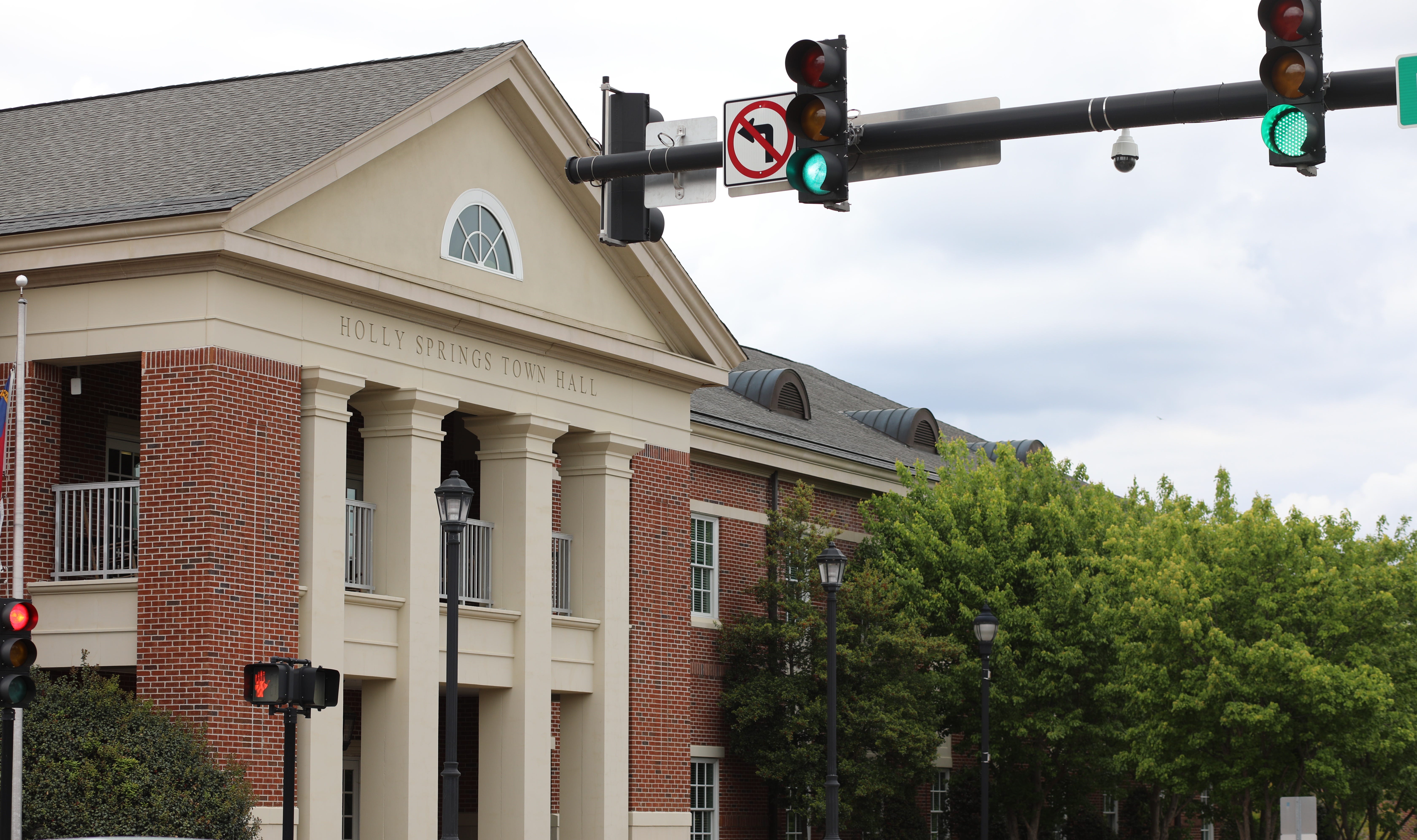
Holly Springs, NC, Nov. 30, 2025 — The Holly Springs Town Council will meet Tuesday, December 2nd, at 7:00 p.m. at Town Hall (directions). Several governance and community items are on the agenda (packet), including routine approvals, annual organizational actions, and opportunities for resident input.
Residents can attend the meeting in person or tune in via the town’s streaming video service (info).
Here’s a summary of what’s on the agenda:
Consent Agenda
Council will briefly discuss its Consent Agenda, a group of routine or non-controversial items approved with a single vote unless a council member requests discussion. This process allows the Town to efficiently address standard business before moving on to more complex matters.
Tuesday’s Consent Agenda includes:
Old US-1 & Friendship Road Interlocal Agreement — Council will consider an agreement with the Town of Apex to help fund safety and traffic improvements at the Old US-1 and Friendship Road intersection. Apex is constructing new turn lanes and a future traffic signal. Holly Springs would contribute approximately $150,000 from fee-in-lieu funds collected from the Friendship Innovation Park development. The contribution reflects the Town’s proportionate share of impacts generated by that project and supports a coordinated regional infrastructure upgrade. (more information)
Calvert Sports Academy Development Plan – Final Extension Request — The developers of the 270,000-square-foot Calvert Sports Academy and Development Center are requesting the final six-month extension allowed under Town rules, moving their plan expiration date to July 1, 2026. The applicant states they continue to make progress in securing capital for the project. If the extension is granted, they must submit civil construction drawings before the deadline; otherwise, the plan will expire and require a new application. (more information)
Consent Order: Greenhawk/Ragan vs. Town (Village at Harris Lake Subdivision) — Council will consider a proposed legal settlement regarding the Town’s August 2025 denial of the 279-unit Village at Harris Lake subdivision. After the denial, the developers appealed, arguing the decision lacked adequate supporting evidence. Under the proposed Consent Final Order, the Town’s denial would be reversed, and the subdivision would be approved as originally submitted, consistent with state law. In return, the developers would waive any claim to attorneys’ fees, allowing the Town to avoid further legal costs and conclude the case. (more information)
Organizational Meeting
As part of the annual post-election procedures, the Council will hold its Organizational Meeting, which includes recognizing outgoing members, swearing in newly elected officials, selecting a Mayor Pro Tempore, confirming appointments to regional boards and committees, and adopting the official 2026 meeting schedule.
Public Comment Period
During the meeting, residents may share feedback with the Council in writing or in person.
Written comments may be submitted through the Town’s online form or by emailing the Town Clerk at linda.mckinney@hollyspringsnc.gov by 5:00 p.m. the day before the meeting. A summary will be read into the record.
In-person commenters must sign up with the Town Clerk before the meeting. Speakers are allotted up to three minutes each. Comments are not acted on immediately by Council but may be referred to staff or scheduled for future consideration.
Manager’s Report
The Town Manager, Randy Harrington, will provide updates on ongoing projects, operations, and other matters affecting the community.