
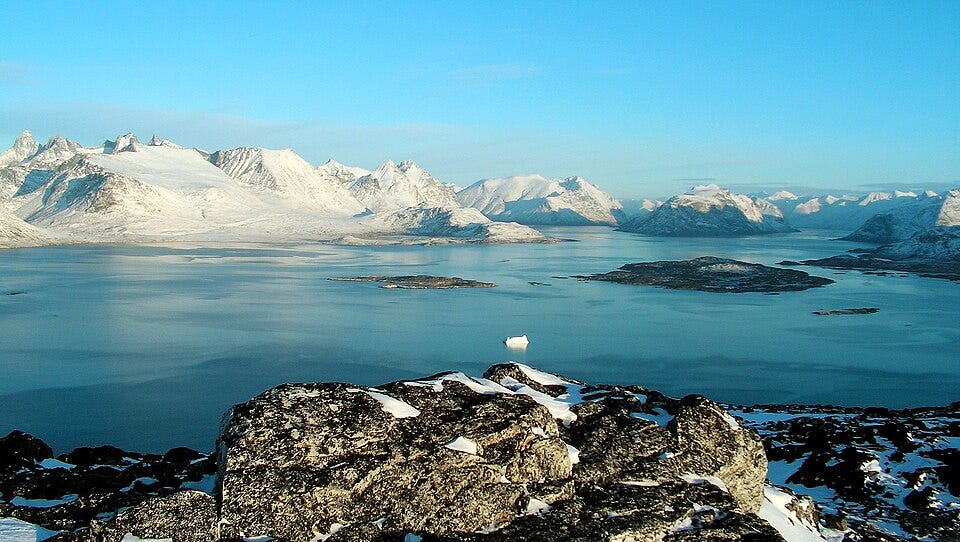
Holly Springs, NC, Jan. 7, 2025 — It is tempting to think of Greenland as distant and abstract, a massive island most people will never visit, discussed mainly in terms of maps, minerals, and missile defense. But if the United States were to use military force to take Greenland, it would instantly stop being an Arctic story and become something much more uncomfortable. It would become a story about what happens when an ally decides another ally’s sovereignty is optional.
Greenland is a self-governing territory within the Kingdom of Denmark. Denmark is a NATO ally. That context is not a footnote. It is the whole point. Even floating the idea of military force against Greenland stretches trust. Acting on it would snap that trust cleanly.
From Europe’s perspective, this would not be read as tough talk or hard-nosed geopolitics. It would be read as a line being crossed. The entire premise of NATO is that its members do not coerce one another. Once that assumption is gone, the alliance does not just weaken. It changes character.
That is why Danish leaders have warned that a U.S. takeover of Greenland could effectively end NATO as we know it. Not because everyone storms out in protest, but because confidence quietly evaporates. Alliances do not usually die in explosions. They decay.
Europe’s reaction, if this ever became kinetic, would likely not resemble panic or theatrics. It would look colder than that. Governments would start asking practical questions. How exposed are we? How dependent are we? How quickly can we reduce both? Automatic deference to U.S. leadership would fade. Access to bases, logistics, and airspace would tighten. European-led security arrangements, especially in the Arctic, would shift from a long-term goal to an urgent necessity.
For decades, Europe has accepted U.S. military dominance because it has been accompanied by restraint and predictability. Once the U.S. demonstrates a willingness to use force against allied territory, that bargain changes. What once felt like protection begins to feel like leverage.
NATO itself probably would not collapse overnight. There would still be meetings, statements, and flags. But something more important would be missing. Planning would slow down. Trust would thin. Article 5 would cease to feel automatic and begin to feel situational. Countries would not rush for the exits. They would hedge. And hedging is how alliances hollow out.
For Greenlanders, the damage would be more severe and last longer. A military takeover would not be an abstract debate about security priorities. It would be a direct hit to self-determination. Even a short-lived operation would poison U.S. involvement, military or commercial, for decades. Any future discussion of partnership would be met with suspicion rather than enthusiasm.
Denmark, meanwhile, would have no choice but to rethink its security posture permanently. The assumption that the United States is the ultimate backstop would be gone. In its place would be a hard pivot toward Europe, regardless of cost.
Context matters here. The world has just watched U.S. military action in Venezuela, an episode that sparked international criticism and renewed concerns about unilateral intervention. A Greenland operation would not be judged on its own merits. It would be read as part of a pattern, proof that Washington is increasingly willing to use force to resolve political problems when legal or multilateral routes are inconvenient.
Once that perception sets in, it is hard to reverse. That is especially true among countries that already view rules-based order language with skepticism.
Outside Europe, the recalibration would be quieter but no less real. Asian allies would stay publicly aligned while privately planning for more independence. Many countries in the Global South would stop taking U.S. appeals to sovereignty seriously. Adversaries would not need to respond dramatically. They would benefit simply by watching alliances fray.
The most significant shift, though, would be in how its allies experience the United States. Before Greenland, U.S. power is multiplied by choice. Allies stand alongside Washington, share political risk, and lend legitimacy. That consent is what turns raw power into leadership. After a military seizure, that consent disappears.
The United States would not suddenly lack partners. It would not become weak. But it would become unaccompanied. Allies would continue to cooperate when their interests aligned, but they would cease to share outcomes. Endorsements would be replaced by silence. Silence would be replaced by distance.
That is what it really means for the United States to stand alone. Not isolation, but the loss of the multiplier that sustains power. The aircraft carriers are still there. The bases still exist. What is missing is the assumption that others will instinctively stand next to you when the United States moves.
The shine does not vanish overnight. However, once allied consent is withdrawn, it is slow and costly to regain, if it returns at all.
That is the real risk embedded in the Greenland debate. Not what happens in the Arctic, but what quietly changes everywhere else.
About the writer.
Christian A. Hendricks is the publisher and founder of Holly Springs Update, a local news publication covering Holly Springs, NC, and its surrounding area. From time to time, he shares his thoughts and opinions on national, regional, and state interests. He can be reached via email at christian.hendricks@hollyspringsupdate.com.