
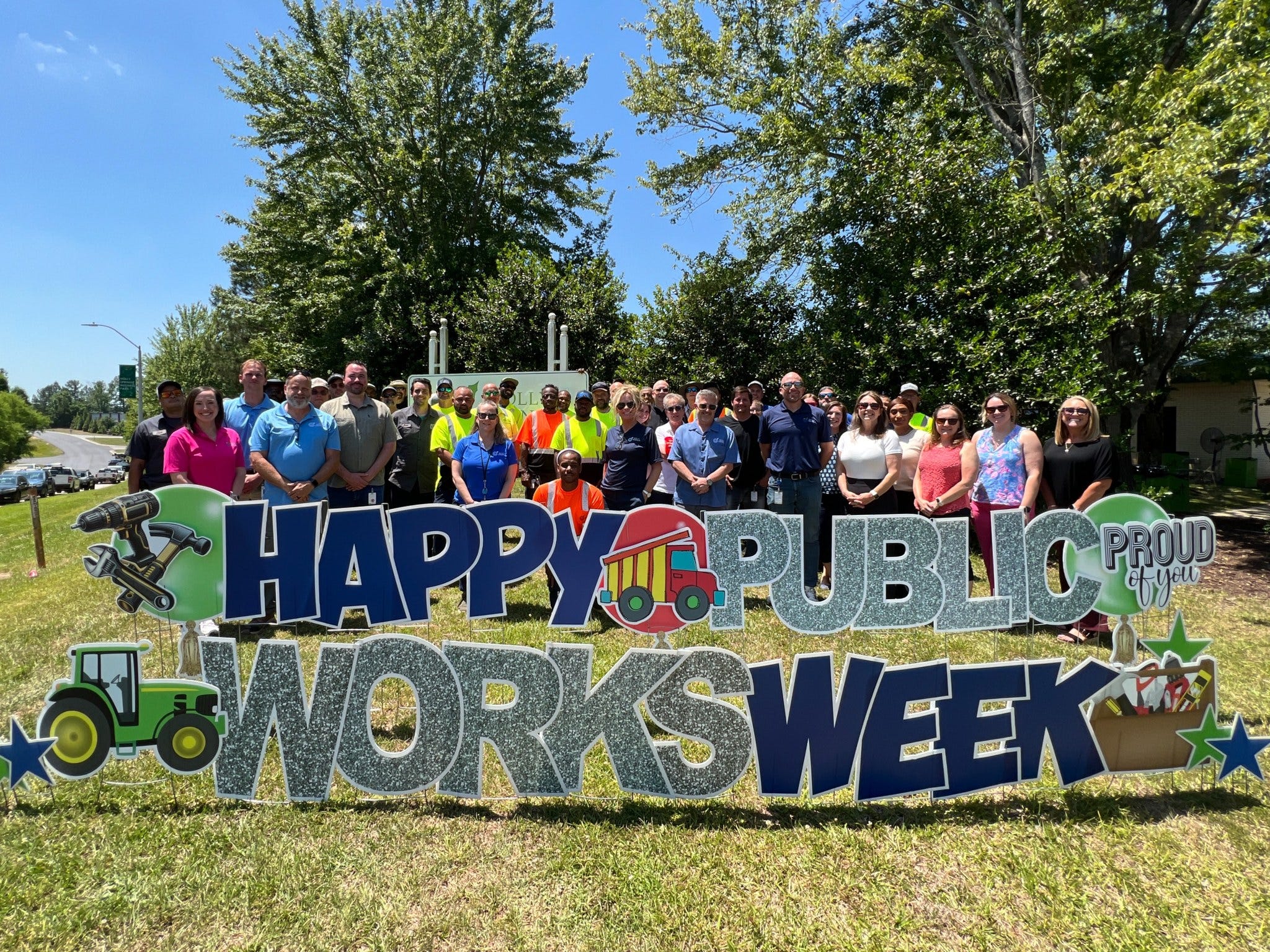
Holy Springs, NC, May 29, 2026 — What began as a ceremonial recognition for National Public Works Week quickly became something broader during last week’s town council meeting: a detailed look at the scale of infrastructure, staffing, and operations now required to keep Holly Springs functioning as one of Wake County’s fastest-growing towns.
During the Town Council meeting, Mayor Mike Kondratick presented a National Public Works Week proclamation (document), while Public Works Director Paige Scott and Utilities and Infrastructure Executive Director Kendra Parrish used the recognition to highlight the departments, employees, and systems that operate behind much of daily life in Holly Springs.
The presentation revealed the size of the town’s growing operational footprint: 451 municipal vehicles valued at approximately $16.5 million, more than 260 miles of water and wastewater infrastructure, roughly $70 million in transportation projects underway, and hundreds of millions of dollars in utility and facilities investments planned or already under construction.
“This year’s theme is Rooted in Service, Powered by Community,” Scott told council while recognizing National Public Works Week.
Scott explained that modern public works operations in Holly Springs now extend far beyond traditional road maintenance. The town’s infrastructure system includes Public Works, Utilities and Infrastructure, Parks and Recreation, and Development Services working across transportation, stormwater, fleet maintenance, solid waste, facilities, utilities, and environmental management.
Some of the work is visible to residents through road projects, sidewalk repairs, and storm response operations. Other systems remain largely unnoticed unless something fails, including wastewater infrastructure, drainage systems, and preventative maintenance programs spread across town facilities.
According to the presentation, Holly Springs’ Fleet Division now maintains 451 vehicles while handling more than 1,300 work orders and over 3,500 labor hours annually. The Streets Division completed 4,735 miles of street sweeping, managed 823 customer service requests, and maintained more than 106 miles of roadside mowing routes during the growing season.
Town crews also responded to multiple severe weather events over the past year, including heavy rain, wind, and snow.
Scott said the Facilities Division has increasingly shifted toward preventative maintenance strategies designed to identify problems before they become larger operational issues. Since November 2025, town facilities technicians have completed more than 850 daily building inspections, contributing to a 22% reduction in service requests.
Solid waste operations have expanded alongside the town’s continued population growth. Scott said new performance metrics tied to the town’s trash and recycling contract reduced missed pickups by 27% compared to the same period last year. The Yard Waste Convenience Center handled more than 4,000 visitors, while yard waste and household goods collection increased by 78%.
“I really like to keep track of the data to let my team see how far they’ve come and to advocate for the more resources that we need,” Scott told the council. “But the thing that makes me most proud is the direct feedback I hear from residents of a job well done.”
Parrish’s portion of the recognition focused on the infrastructure systems operating underneath much of daily town life. Utilities and Infrastructure oversees water, wastewater, and stormwater; transportation; municipal traffic engineering; environmental compliance; building design and construction; and right-of-way acquisition.
The town currently maintains approximately 263 miles of wastewater infrastructure, along with similar amounts of water and stormwater infrastructure. Parrish said that the distance is roughly equal to a one-way trip from Holly Springs to either Washington, D.C., or Charleston.
Holly Springs is also managing one of the largest infrastructure projects in town history through the expansion of the Utley Creek Water Reclamation Facility, a wastewater treatment project expected to exceed $200 million and scheduled for completion in 2030.
At the same time, the town is overseeing more than $150 million in facilities-related projects and preparing to consolidate operational departments into a new Operations Campus later this year.
“For the first time, this group of people, we’re all going to be in the same building,” Parrish said. “Never in the history of Holly Springs have we ever been able to be in one place serving the community.”
Kondratick later summarized public works operations by dividing them into three broad categories: “everything you want to see,” “everything we kind of don’t want to see or think about,” and “all the places that we want to be and enjoy.”
That includes everything from roads, parks, and greenways to drinking water, wastewater treatment, town facilities, and public events.
“Pretty much everything we know, love, and depend on in the town of Holly Springs is brought to you by these folks,” Kondratick said.
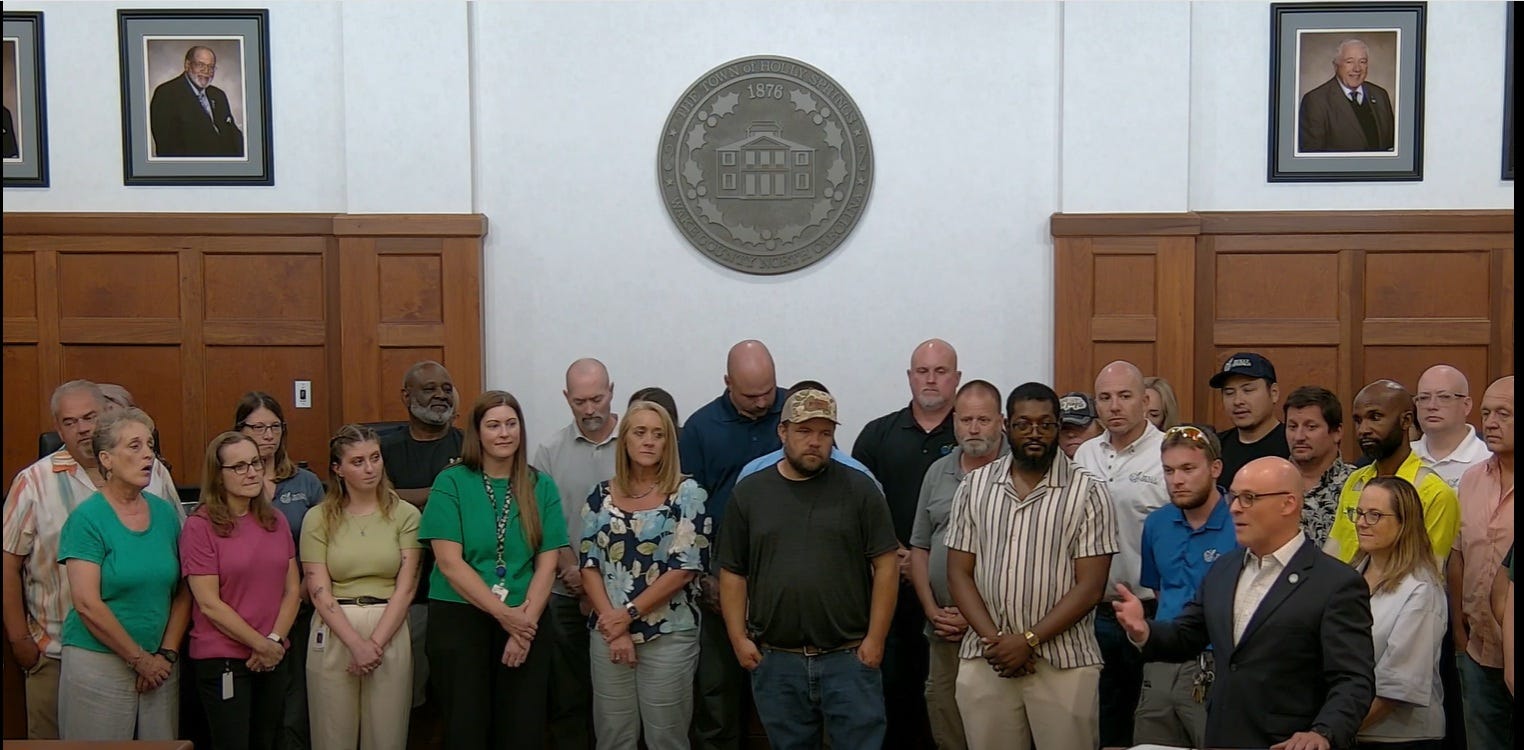
The recognition also arrived during a meeting dominated by broader conversations about growth, transportation, utility expansion, and long-term infrastructure planning. Throughout the evening, council members repeatedly discussed traffic congestion, development pressures, and the cost of expanding infrastructure systems fast enough to keep pace with Holly Springs’ continued growth.
In that context, the Public Works Week recognition offered residents a behind-the-scenes look at the increasingly large and complex operational network required to support a town of more than 53,000 people, much of it operating quietly in the background every day.