
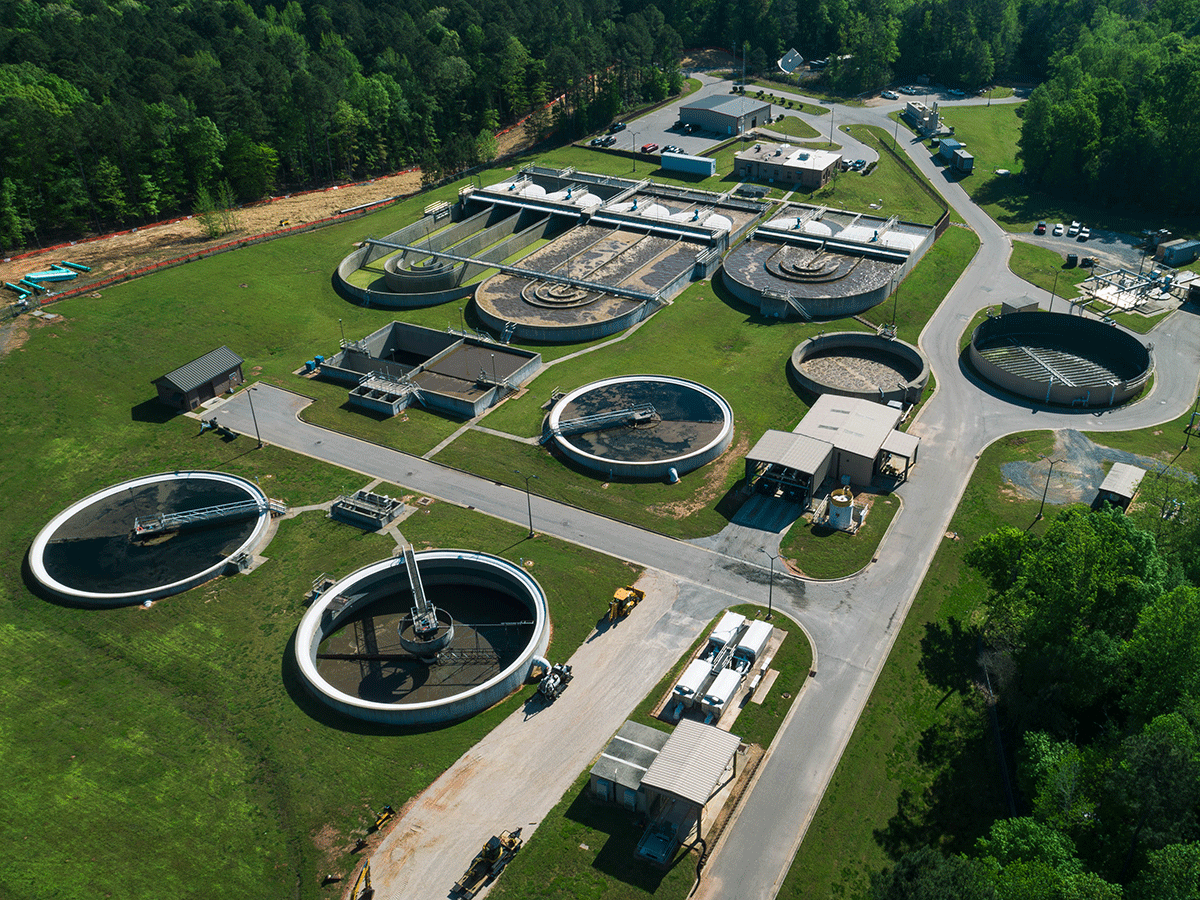
Holly Springs, NC, Jan. 28, 2026 — Town Council has approved the next major step in one of the largest infrastructure projects in Holly Springs history, authorizing a key phase of the Utley Creek Water Reclamation Facility expansion. The project will ultimately cost $219 million and is expected to shape the town’s growth for decades to come.
The vote, taken at the January 20th Town Council meeting, advances the second phase of construction at the Utley Creek facility, which currently treats up to six million gallons of wastewater per day. When complete, the expanded facility will be capable of handling eight million gallons per day.
Town leaders say the expansion is necessary to keep pace with growth, meet environmental standards, and ensure the town can continue approving new development. At the same time, the project's size and financing have raised questions about what was approved and the long-term financial implications.
A Project Years in the Making
Planning for the Utley Creek expansion began in 2020 as part of the town’s long-range utility planning efforts. That work included a master plan, a preliminary engineering report, and multiple design and feasibility studies evaluating future wastewater demand, treatment technologies, and regulatory requirements.
By 2023, the town had completed the engineering analysis required to proceed. In 2024 and 2025, design work and early construction phases were approved. Phase 1 of the project, which includes a new laboratory and operations building, is already underway.
The council's approval advances Phase 2, which will physically expand the plant’s treatment capacity and upgrade its core processing systems.
What Council Approved
While the project’s total cost is $219 million, the council did not approve that entire amount in a single vote. Instead, the council approved three related actions.
First, members approved a $153.16 million construction contract with Adams Robinson Enterprises to build the Phase 2 expansion. This includes new treatment infrastructure and supporting systems needed to increase the plant’s capacity.
Second, the council approved $15.3 million for construction administration and inspection services, along with $16.8 million in contingency funding to account for unforeseen conditions that often arise during large infrastructure projects.
Finally, the council adopted an initial resolution authorizing the town to proceed with financing through revenue bonds and to initiate the approval process with the North Carolina Local Government Commission.
Together, these actions advance the project but do not represent the issuance of the full $219 million in debt at once.
Why the $219 Million Figure Still Matters
The $219 million figure represents the total cost of the Utley Creek expansion. That amount includes design and engineering work already completed, Phase 1 construction, Phase 2 construction, construction oversight, contingency funding, and major equipment and generator purchases.
Some of these costs were approved in earlier years. Others were approved at the January meeting. Taken together, they form a single capital project that is now fully underway.
Although the town is financing the project in stages, the full cost has been established and committed.
How the Project Is Being Financed
The Utley Creek expansion is being paid for through revenue bonds rather than property taxes.
Revenue bonds are repaid using income generated by the town’s water and sewer system. The town plans to issue the bonds in two phases: an initial issuance of up to $140 million, followed by a second issuance in a later year.
Because the bonds are backed by utility revenues, the town must ensure that water and sewer rates remain sufficient to cover annual debt payments. Once issued, the bonds cannot be reduced or delayed.
Town finance staff told council that utility rates have already been modeled to account for the expansion and that previous rate adjustments were made with this project in mind.
Why Growth Is Central to the Financial Plan
The financial model for the Utley Creek expansion assumes continued population and commercial growth.
As new homes and businesses connect to the system, the cost of operating the facility and repaying its debt is spread across more customers. If growth continues as projected, the impact on individual households is expected to remain manageable.
If growth slows, however, the situation changes. The bond payments remain fixed regardless of the number of customers connected. In that case, utility rates would need to increase to ensure the town can meet its financial obligations.
Town officials acknowledged that the project's long-term success depends largely on whether growth continues at or near current projections.
What This Means for Residents
For residents, the Utley Creek expansion does not result in an immediate tax increase. Property taxes are not being used to fund the project.
However, the project represents a long-term financial commitment that will affect water and sewer rates over time. The pace of growth in Holly Springs will play a major role in determining how noticeable that impact becomes.
If growth remains strong, rate increases are expected to be gradual. If growth slows, residents could see higher utility bills as the town works to meet its bond obligations.
A Long-Term Investment in Holly Springs’ Future
Town leaders have described the Utley Creek expansion as both necessary and unavoidable, noting that delaying the project would likely lead to higher costs and potential regulatory challenges.
At the same time, the size of the investment makes it one of the most significant infrastructure decisions in Holly Springs history.
The project represents a long-term commitment tied directly to the town’s growth trajectory. As construction continues and financing moves forward, the full impact of that decision will become clearer not only in town budgets but also in the utility bills residents receive in the years ahead.
Needs clarification. If the bonds are fixed-rate fixed-payment, growth is not a real issue. If payments or interest ramp up over time, then yes growth would prevent rate increases, but is that the case? Population may decelerate but it won’t drop here. If the current rate-payer base can handle the last payment (how long is amortization?) then what are you saying?
Remember the town of Holly Springs does not control rate increases for purchasing water, we are a consumer. The price of water will increase, count on it. Therefore financing expansion of the water treatment plant is part of a budget that has several moving parts.