
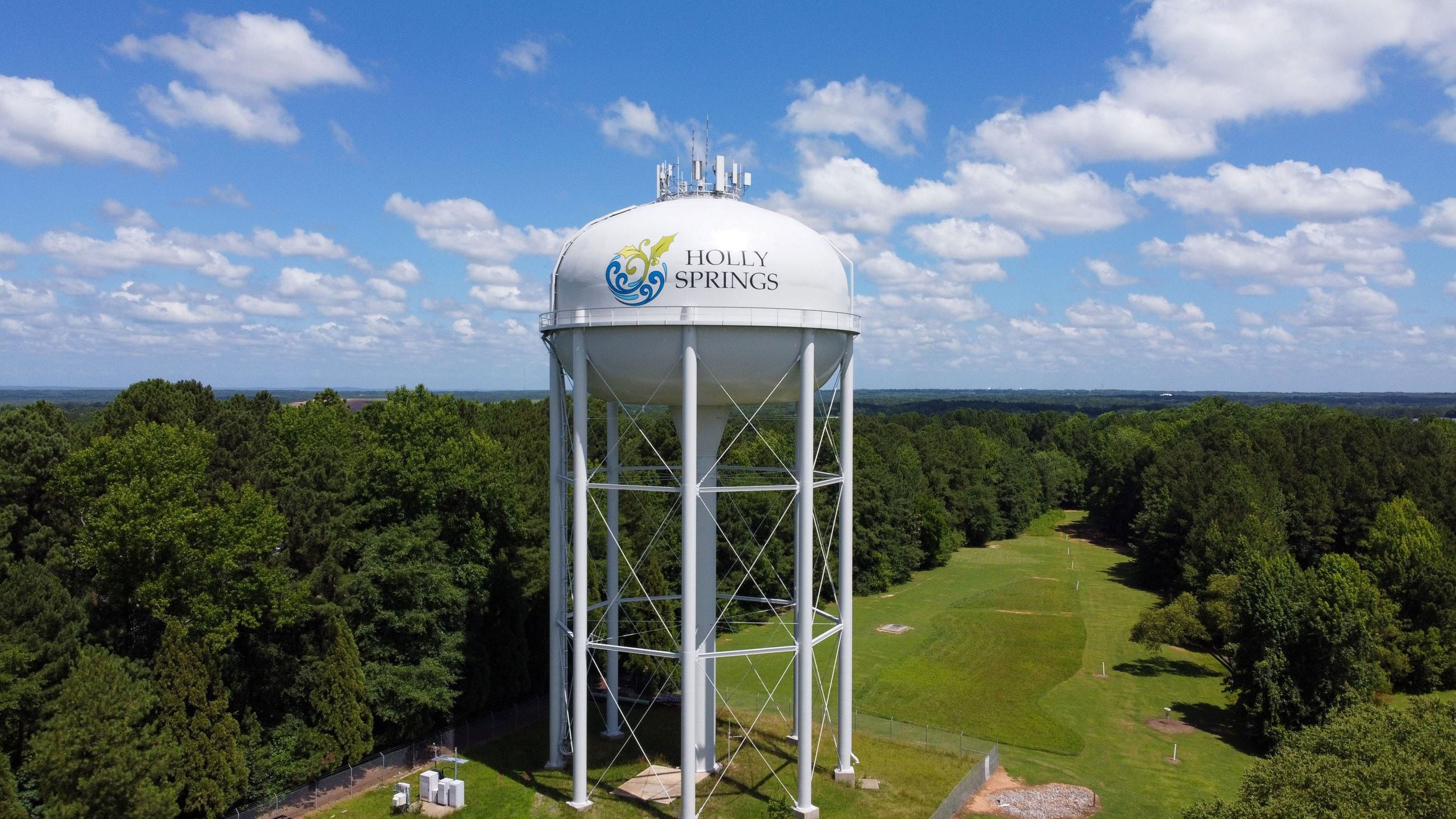
Holly Springs, NC, Jun. 3, 2026 — The Holly Springs Town Council unanimously adopted a $139 million budget (document) for fiscal year 2026-27 last night, approving a spending plan that attempts to balance some of the community’s most frequently cited priorities: easing traffic congestion, maintaining affordability, expanding public services, and building the infrastructure needed to support a rapidly growing town. The budget keeps the municipal property tax rate unchanged at 34.35 cents per $100 of valuation, a figure council members noted remains the lowest municipal tax rate in Wake County.
Related story: Holly Springs (NC) Council Expected to Approve Utility, Stormwater Increases in $139 Million Budget Package Next Tuesday (6/2/26)
While the tax rate remains flat, residents will see higher utility bills beginning July 1st. The adopted budget includes an $11.89 monthly increase for a typical residential water and wastewater customer, a $1.30 increase in stormwater fees, and a 69-cent increase in garbage and recycling costs tied to the town’s contract with GFL Environmental. Town officials said those increases are necessary to fund major infrastructure investments, particularly in water, wastewater, and stormwater systems.
Budget Director Corey Petersohn told council that the spending plan continues to focus on three broad priorities identified by both town leadership and residents: managing traffic and improving mobility; enhancing parks, facilities, and events; and managing growth while protecting the environment. The budget also includes 19 new full-time positions and incorporates changes endorsed by council during its May budget workshop, including Saturday service for the Holly Springs Hopper, creation of a voluntary utility bill round-up assistance program, planning for a potential 2027 transportation bond referendum, and an additional $5,000 for nonprofit grants.
Although the budget itself generated little debate, water infrastructure emerged as one of the central themes of the discussion. Earlier in the meeting, a resident questioned whether regional water supplies can keep pace with continued growth throughout western Wake County. The resident described water as “our most essential and finite resource” and raised concerns about future demand from ongoing residential development, the proposed North Carolina Children’s Hospital in Apex, and potential data center projects. They warned that drought conditions and continued development could place increasing pressure on the region’s water resources and called current growth patterns “reckless.”
Council Member Chris Deshazor directly addressed those concerns during the budget discussion. He said one of the most common messages council members hear from residents is that infrastructure investment should come before additional growth, and argued that the utility increases reflect exactly that approach. “One of the things that we always hear, and I think every person that’s on this council has heard it, is that we need to pause development and invest in infrastructure. And that’s what we’re doing with water,” Deshazor said, pointing to ongoing investments intended to secure long-term water capacity for the community.
Mayor Mike Kondratick framed the budget as a response to concerns he heard repeatedly from residents during last year’s election cycle. Transportation and affordability, he said, were among the issues residents raised most often. He pointed to continued investment in traffic management technology, expansion of Hopper service, future transportation planning, Eagles Landing Park, nonprofit grants, and public safety services as evidence that the town is directing resources toward priorities residents have identified. He also argued that maintaining the current tax rate reflects an awareness of the economic pressures facing households while still moving forward with major infrastructure projects.
Beyond the coming fiscal year, the budget documents also highlight several major decisions looming. Among them are future operating costs associated with Eagles Landing Park, staffing and equipment needs for two future fire stations, expansion of wastewater treatment capacity beyond the Utley Creek Water Reclamation Facility’s current 8-million-gallon-per-day expansion project, and the possibility of asking voters to consider another transportation bond referendum. Town officials noted that previous transportation bond projects are nearing completion, with Holly Springs Road Central expected to be the final major project funded through the 2018 bond authorization.
The adopted budget totals $139.2 million, an 18.3% increase over the previous year’s budget, driven largely by community investment and capital projects. The General Fund budget totals $72.9 million. Town documents describe the spending plan as a continuation of the strategic priorities adopted by the council while preparing the community for future transportation, utility, and public safety needs.
Click on the image to view the full budget document

With no opposition from council members, the budget and accompanying tax collection order were approved unanimously, concluding a process that began with the Town Manager’s budget presentation in May and setting the town’s financial roadmap for the fiscal year that begins July 1st.