
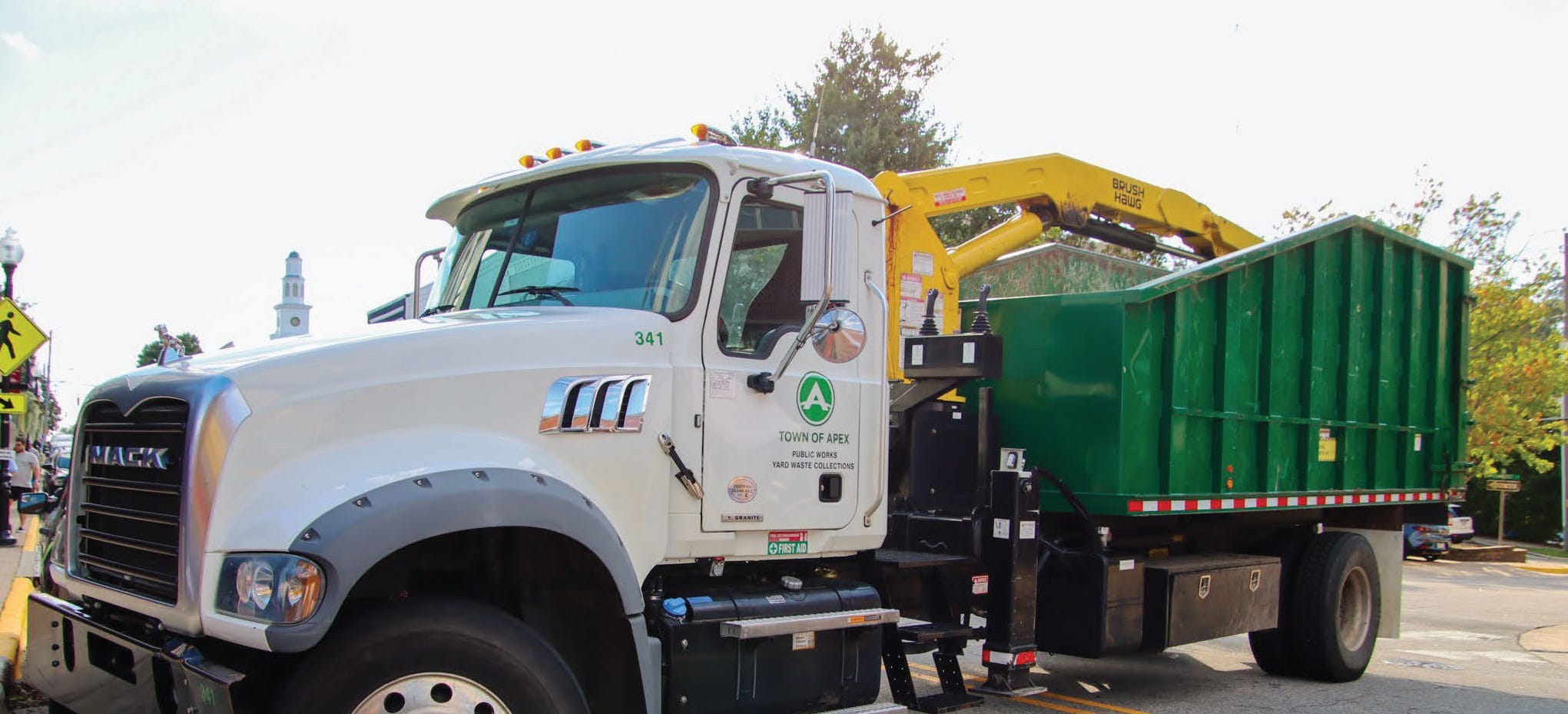
Apex, NC, Apr. 17, 2026 — Apex is preparing to significantly change how yard waste is collected, with a multi-year plan that would eliminate grass pickup, shift residents to biweekly collection, and eventually replace curbside piles with cart-based service.
The proposal, presented by Public Works Director John Mullis during the town council meeting held on April 14th, follows nearly three years of study and prior council direction. If adopted, the first ordinance changes would take effect July 1st, 2026, with additional changes rolling out through 2028 as the town transitions to a more structured system.
What’s Changing and When
The most immediate impact for residents would come in 2027. The town is proposing to stop collecting grass beginning Jan. 1st. Mullis made the timeline explicit: “So January 1st of 2027 is where we’re proposing to eliminate the collection of grass.”
Beyond that shift, the town is also preparing to change the yard waste collection frequency. Beginning Feb. 8th, 2027, Apex would move to biweekly pickup, with routes divided into A and B zones using I-540 as the boundary. Leaf vacuum collection would remain in place during fall, with seven sweeps planned each season.


The longer-term change is structural. Yard waste carts would be delivered in May and June of 2028, with containerized collection beginning shortly after July 4th. Staff said the move is intended to standardize service, reduce the amount of material entering stormwater systems, and improve neighborhood appearance, while aligning with the town’s sustainability goals.
Why Grass Collection Is Ending
At the center of the proposal is not the overall yard waste volume, but the difficulty of handling grass. Mullis drew a clear distinction between materials the town can process and those it cannot. “We have no trouble getting rid of woody material… But grass is one of those items that have herbicides, pesticides, [and] people fertilize their yard,” he said, pointing to contamination as a limiting factor.
He also said Apex does not have guaranteed long-term disposal contracts for grass, a constraint shared by nearby communities, including Cary and Holly Springs. That reality, combined with environmental considerations, is driving the shift away from collection.
Staff framed the change as part of a broader effort to reduce nutrient inputs to waterways and protect Jordan Lake as a drinking water source. Mulching grass in place, rather than hauling it away, was presented as a more sustainable alternative that reduces strain on both disposal systems and stormwater infrastructure.
What Residents and Council Raised
To support the transition, the town is proposing a series of ordinance updates that would reshape how yard waste is handled at the curb. Material would need to be placed three feet behind the curb instead of at the edge of the street, and limb length would be reduced from eight feet to six feet to accommodate rear-loading trucks. The town would also define more than two cubic yards of material as excess yard waste, roughly the volume of a pickup truck bed, with additional fees applied for larger amounts.
Additional restrictions would prohibit placing yard waste near storm drains or in sidewalks, ramps, and bike lanes, and would prevent residents from combining material from multiple properties. Mullis tied those changes to a broader shift away from the current system, saying, “We can’t use the street as a dumping ground,” as the town looks to move away from loose debris at the curb.
Council members focused much of their discussion on how the changes would play out in everyday situations. Questions centered on cul-de-sacs with limited frontage, whether homeowner associations would accommodate a third cart, and how elderly or disabled residents would manage the transition.
Mullis said staff expect to work directly with residents to address placement challenges and said other communities have adapted HOA requirements to accommodate similar systems. He also said the town is planning an opt-out option, though residents would still pay the yard waste fee, and that backdoor collection could be available for eligible residents if material can be placed in the cart.
The discussion reflected a broader tension between system efficiency and household practicality. While staff emphasized environmental benefits and operational constraints, council questions repeatedly returned to how those changes would affect residents' daily routines across different types of neighborhoods.
Council has already taken initial steps toward the transition. At its February retreat, members unanimously supported moving to biweekly collection and evaluating containerization, while a motion to begin communicating the eventual elimination of grass collection passed 3-2. A separate motion to immediately eliminate grass collection did not receive a second.
The next step will be additional public input at the April 28th meeting, followed by proposed ordinance revisions on May 12th. If approved, the changes would set Apex on a path toward a fundamentally different yard waste system, one that replaces flexibility at the curb with a more controlled and environmentally driven model.