
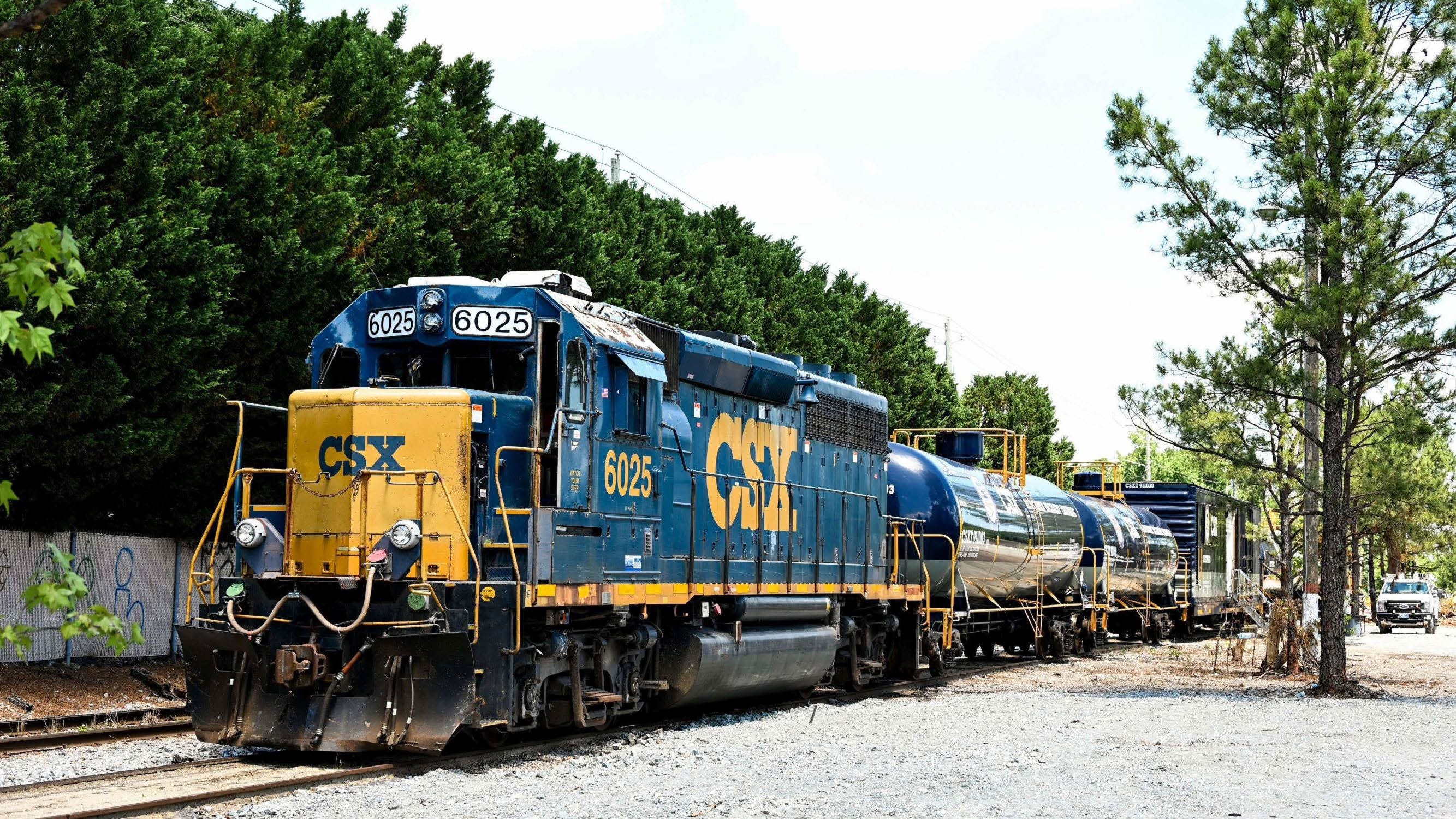
Apex, NC, Jun. 17, 2026 — After two years of study, Apex leaders are confronting a difficult possibility: even a multimillion-dollar investment in rail infrastructure may not be enough to move CSX switching operations out of downtown.
During last night’s council work session, consultants presented findings (document) showing that upgrading the Durham Spur rail corridor could cost roughly $18.1 million. But much of the discussion focused on a larger question: whether CSX would ultimately relocate its operations even if those improvements were made.
The study grew out of long-standing community concerns about freight rail activity in downtown Apex, including blocked crossings, idling trains, noise, vibration, air pollution, and safety issues. Originally launched in April 2024, the effort began as a search for potential locations to relocate CSX’s switching operations from the town center.
As discussions with CSX progressed, however, the focus shifted. Railroad officials told planners that crews serving customers along the Durham Spur already operate close to federally regulated 12-hour work limits. Because moving the switching yard farther south would increase travel time, consultants were asked to evaluate whether increasing train speeds could provide sufficient operational flexibility to make relocation feasible.
The resulting analysis examined the approximate 18.6-mile Durham Spur corridor between Apex and Durham. Today, trains operate on the line at a maximum speed of 10 miles per hour because the track is classified as Class 1. Consultants evaluated what it would take to upgrade the corridor to Class 2 standards, which would allow speeds of up to 25 miles per hour.
The corridor was found to be generally in good condition. Consultants reported that much of the rail infrastructure remains serviceable despite portions of the rail being between 75 and 125 years old. The route includes 23 at-grade crossings and two rail bridges that would require additional analysis in future phases of the project.
Using planning-level estimates, the study projected that upgrading the corridor would cost approximately $18.1 million. That figure includes rail improvements, tie replacements, ballast work, drainage improvements, and a 50 percent contingency to account for unknown conditions.
While the cost estimate drew attention, council members appeared more concerned about what the town would receive in return for that investment. Several questioned whether CSX would have any obligation to relocate operations even if public funding were used to improve the privately owned rail corridor.
Council members also noted that the $18.1 million estimate represents only a portion of the potential cost. The figure does not include the acquisition of land for a new switching yard, the construction of replacement facilities, or other infrastructure that CSX would require before relocating operations. Town staff acknowledged that any future move would likely involve significant negotiations with the railroad, which currently has no obligation to relocate.
Funding emerged as another major concern. The study identified several federal grant programs that could potentially support rail improvements, but council members questioned how competitive the project would be compared with larger transportation projects across the country. Some members suggested that future efforts should focus on securing regional, state, or federal funding rather than committing additional town dollars.
Consultants recommended the next phase of work that would include a more detailed operations analysis, a full inspection of the corridor, and an evaluation of possible crossing closures. That work is estimated to cost between $300,000 and $400,000.
By the end of the discussion, council members signaled little appetite for funding that next phase with town money. While there was interest in exploring outside funding opportunities, the overall sentiment suggested the project may be nearing a pause unless new funding sources or circumstances emerge.
As one staff member summarized during the discussion, “This is a very difficult, expensive problem.” After two years of study, council members appeared to agree that moving CSX operations out of downtown Apex remains an appealing goal, but one with no clear path forward today.
What’s Next
Town staff will explore whether regional transportation partners, state agencies, or federal grant programs could help fund additional study work. Council did not authorize further spending on the project during the work session and indicated future action will likely depend on outside funding opportunities.
CSX is not going to spend the money when CAMPO initiatives clearly call for rail expansion. A .5 cent sales tax exists in Wake county to fill the coffer. https://www.campo-nc.us/about-us/committees/wake-county-transit-planning-advisory-committee-tpac Transportation methods are changing (autonomous vehicles, trucks, and cars) that are on demand instead of fixed routes. Price out Amtrak from Raleigh to Durham to project schedule and costs. CSX will also have priority.