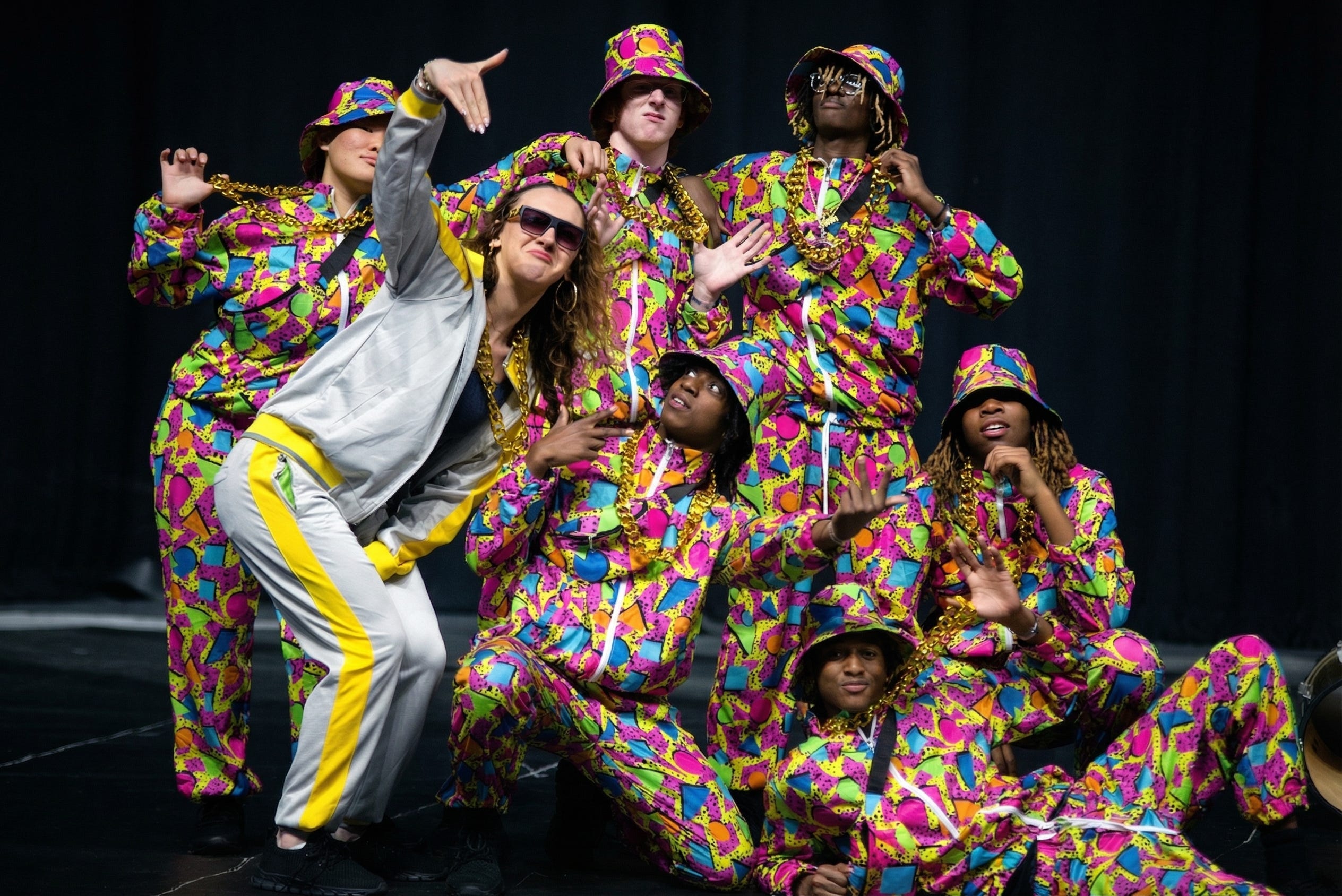
Fayetteville, NC, Mar. 31, 2026 — This past weekend, the Atlantic Indoor Association (AIA) turned Crown Coliseum in Fayetteville, North Carolina, into a gathering place for the marching arts community across the Southeast.
Teams traveled from North Carolina, South Carolina, and southern Virginia, bringing with them months of preparation, creative design, and disciplined rehearsal. What unfolded across two days was more than a competition. It was a full-scale showcase of an activity that blends performance, precision, and personal growth.
On Saturday, 72 Winter Guard units took the floor, followed by 36 percussion and winds ensembles on Sunday. The range of performers reflected the depth of the activity, from elementary students just beginning their journey to adults who have spent decades participating, teaching, and giving back.
Breakout: Championship Results (Quick Access)
For those looking for scores and placements, full results are available by discipline:
Winter Guard Results (Saturday, March 28th) - Click for Results Page
Percussion and Winds Results (Sunday, March 29th) - Click for Results Page
Tip: Results are organized by category, with top placements listed in order of highest to lowest score.
Photos: Photo libraries of each participating school and group’s performance, and the Awards Ceremony are available at https://www.mickstewartphotography.com/Winter-Guard/2026-Season/AIA-South-Championship
Where Art and Competition Meet
At its core, the activity exists at the intersection of art and sport. Performers combine dance, musical interpretation, and equipment work into productions that are judged on both execution and overall effect.
The structure and evaluation system are influenced by Winter Guard International, the national organization that has helped shape the modern era of the activity. But what happens on the floor is only part of the story.
Behind every performance are early mornings, late nights, and countless repetitions. Small details such as timing, spacing, and body control are refined over weeks and months, often measured in inches and fractions of a second. The result is a performance environment where discipline and creativity work together.
To fully appreciate the weekend, it helps to understand the three disciplines that make up the indoor marching arts.
Understanding the Three Disciplines
Winter Guard
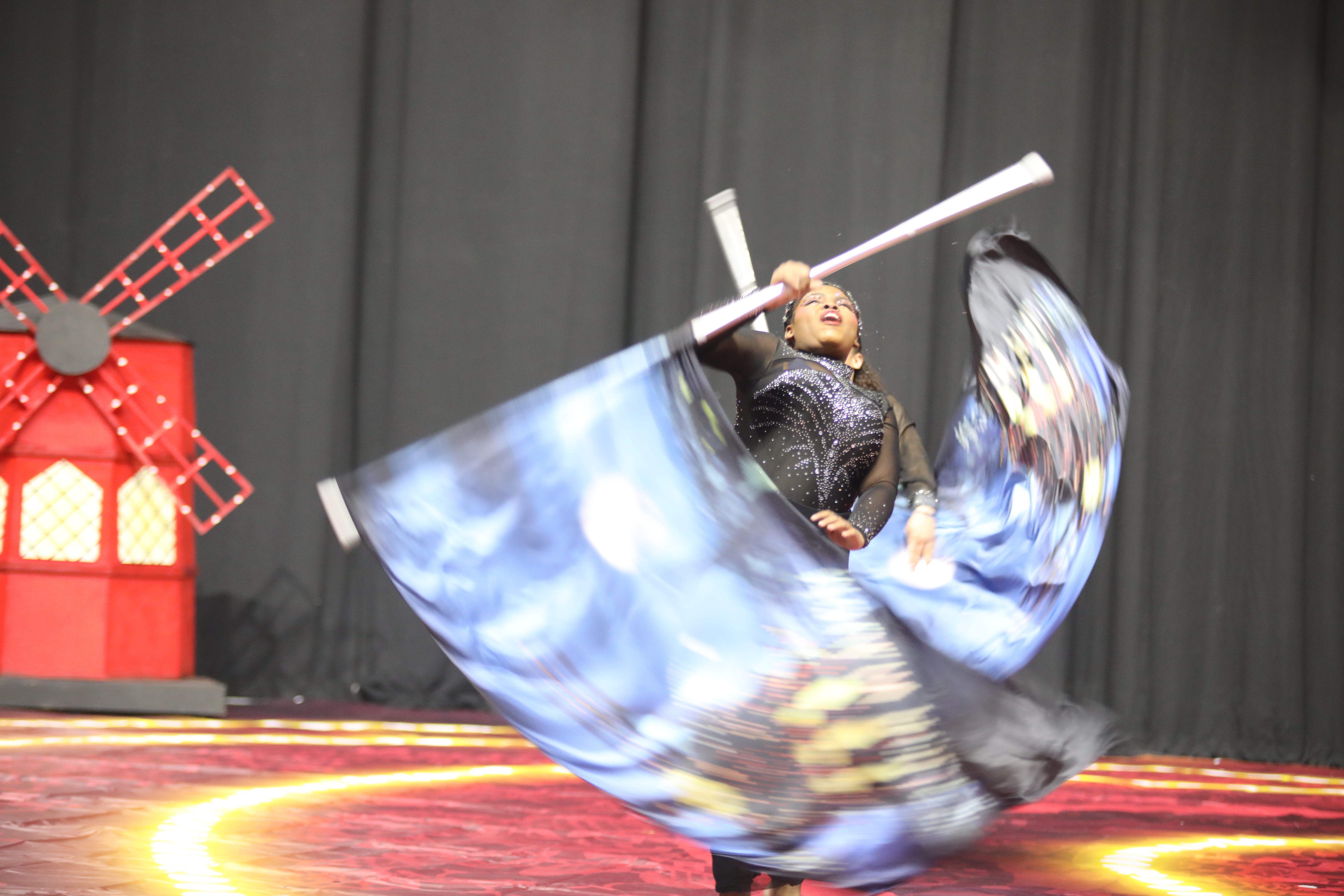
Often described as the most theatrical of the three, Winter Guard combines dance, movement, and equipment work using flags, rifles, and sabers. Performances take place on a large tarp that transforms the gym floor into a stage, with costuming, props, and music creating a fully realized visual production.
There are no traditional instruments. Every element is conveyed through motion and design, with performers telling a story through choreography and synchronized equipment work.
Indoor Percussion (Drumline / IPE)
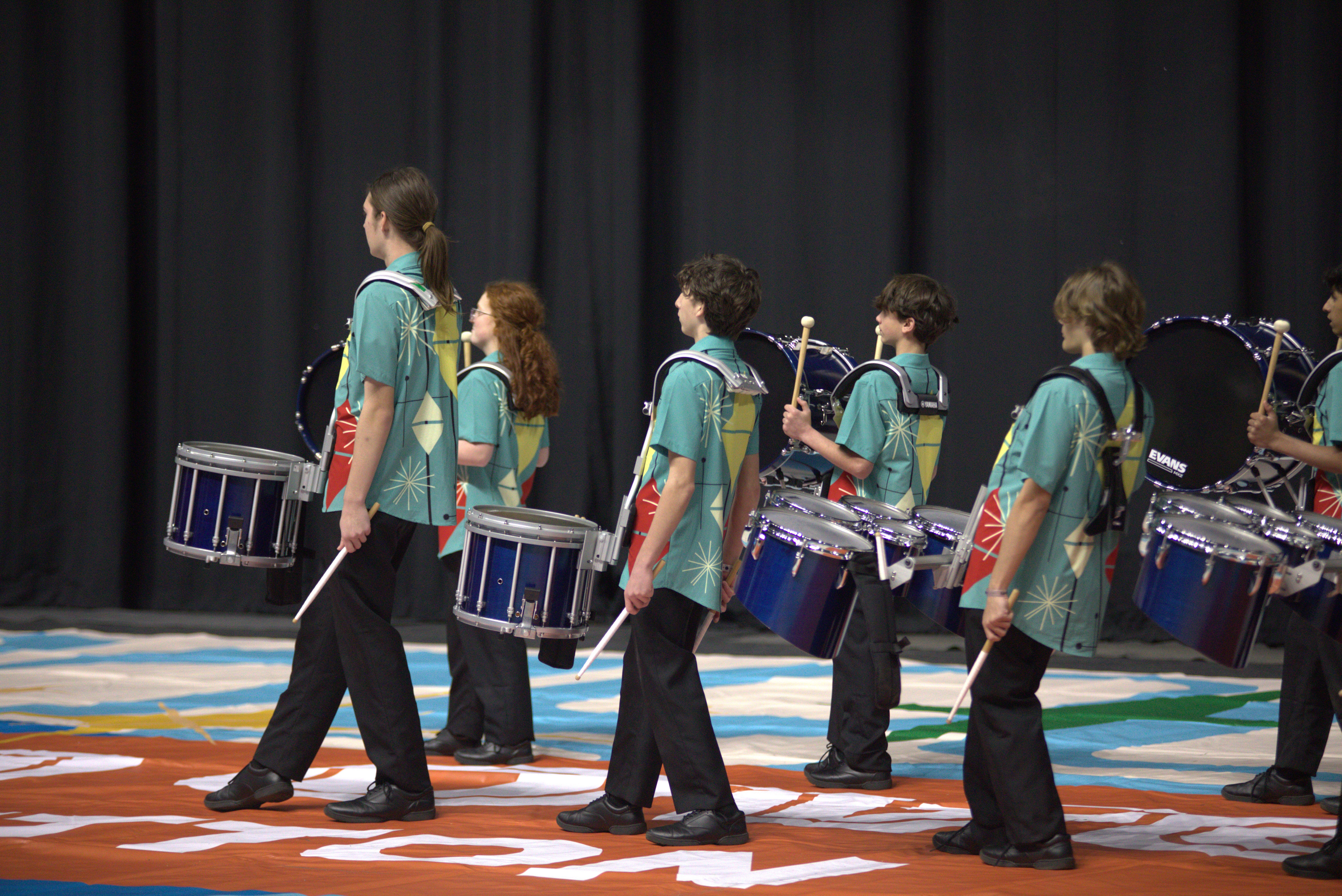
Indoor Percussion Ensembles (IPE) bring together rhythm, music, and visual performance. These groups typically include a battery with snare drums, tenor drums, bass drums, and cymbals paired with a front ensemble of marimbas, vibraphones, synthesizers, and auxiliary percussion.
Modern shows often incorporate movement, staging, and theatrical elements, making percussion performances as visually engaging as they are musically complex.
Indoor Winds
The newest of the three disciplines, Indoor Winds combines elements of marching band with the indoor performance format. Ensembles feature brass and woodwind instruments supported by percussion, performing coordinated musical and visual programs.
Like Winter Guard and percussion, wind groups use choreography, staging, and floor design to enhance storytelling, bringing a full ensemble sound into the same competitive environment.
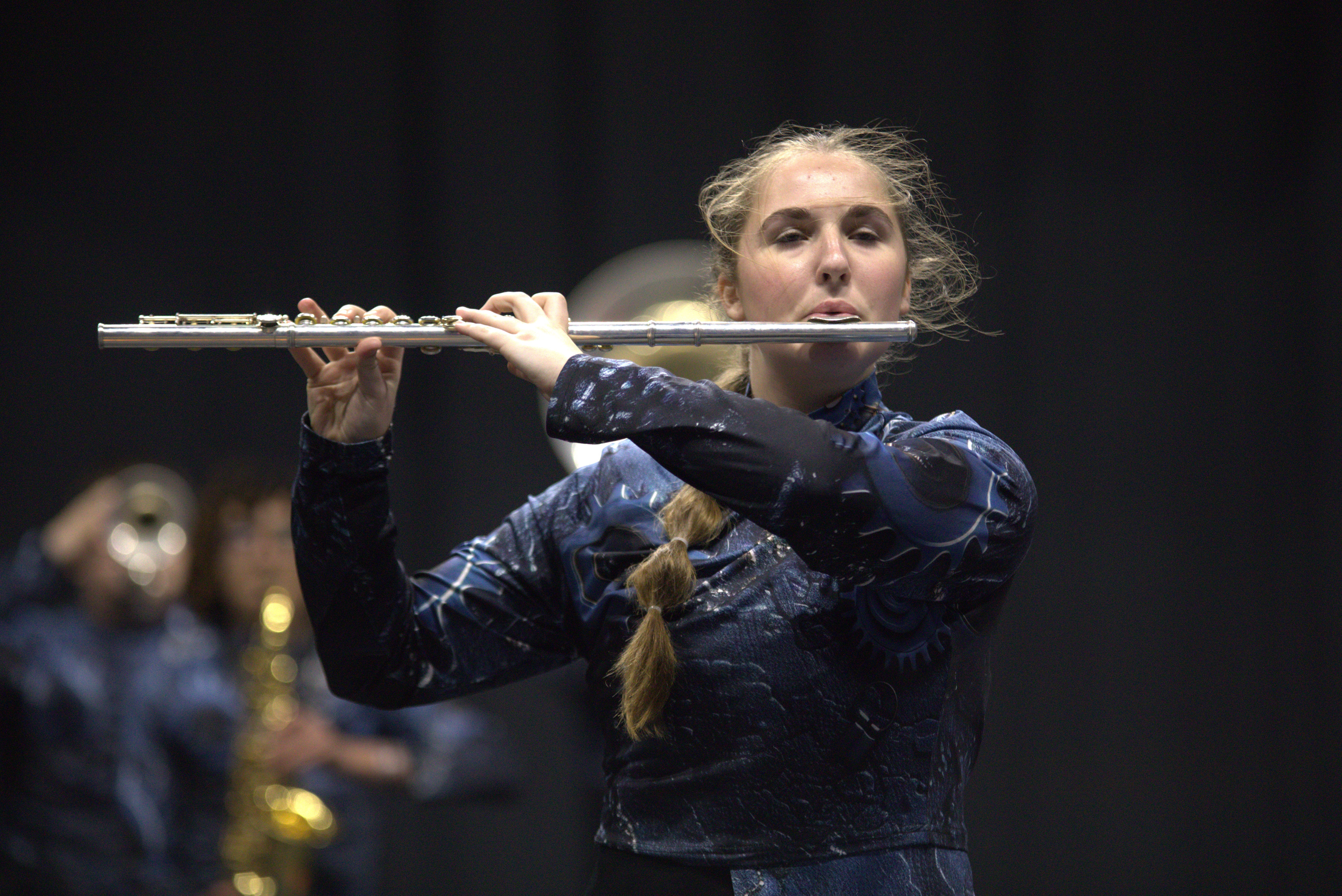
“It’s for the kids.”
For Mike McCain, AIA South Second Vice President and longtime participant in the activity, that balance between performance and purpose is what keeps him connected to the activity nearly two decades after he first joined as a high school student.
He has performed, taught drumline and color guard across multiple states, and now works with organizations operating at the highest levels of the activity. Yet when asked why he continues to invest the time and energy, his answer remains direct.
“It’s for the kids.”
That perspective carries through every level of the weekend. While the performances themselves are polished and competitive, the underlying purpose is developmental. Students are given a place to grow, contribute, and experience something larger than themselves.
The Moments You Don’t See
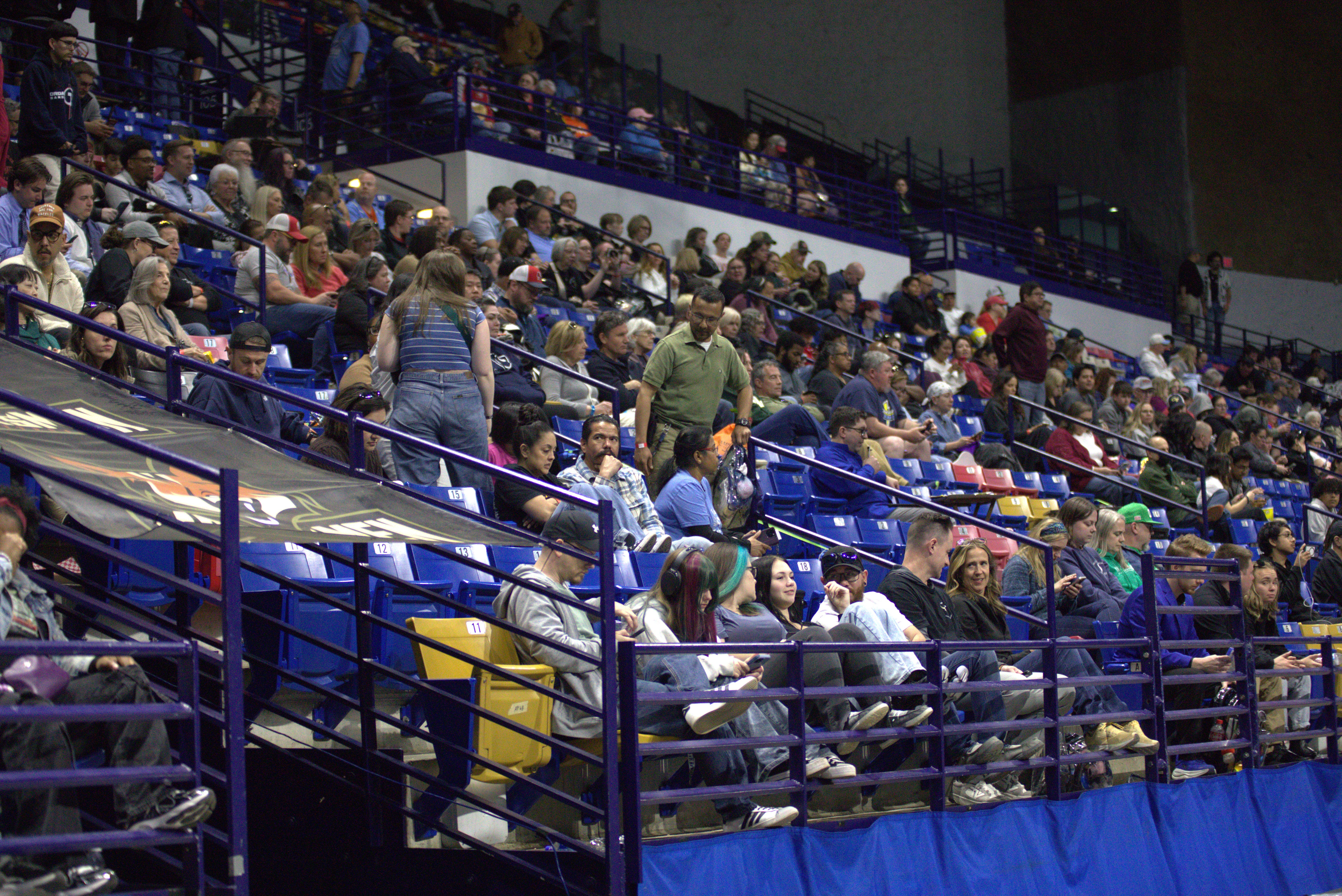
Some of the most meaningful parts of the weekend never appear on a score sheet. They happen in the transition spaces, in hallways after awards, in conversations between groups, and in the stands as performers watch one another.
Students replay what they have seen, pointing out moments that stood out and imagining how they might reach that level themselves. It is common to hear comments like: “Did you see that group? I want to do that one day.”
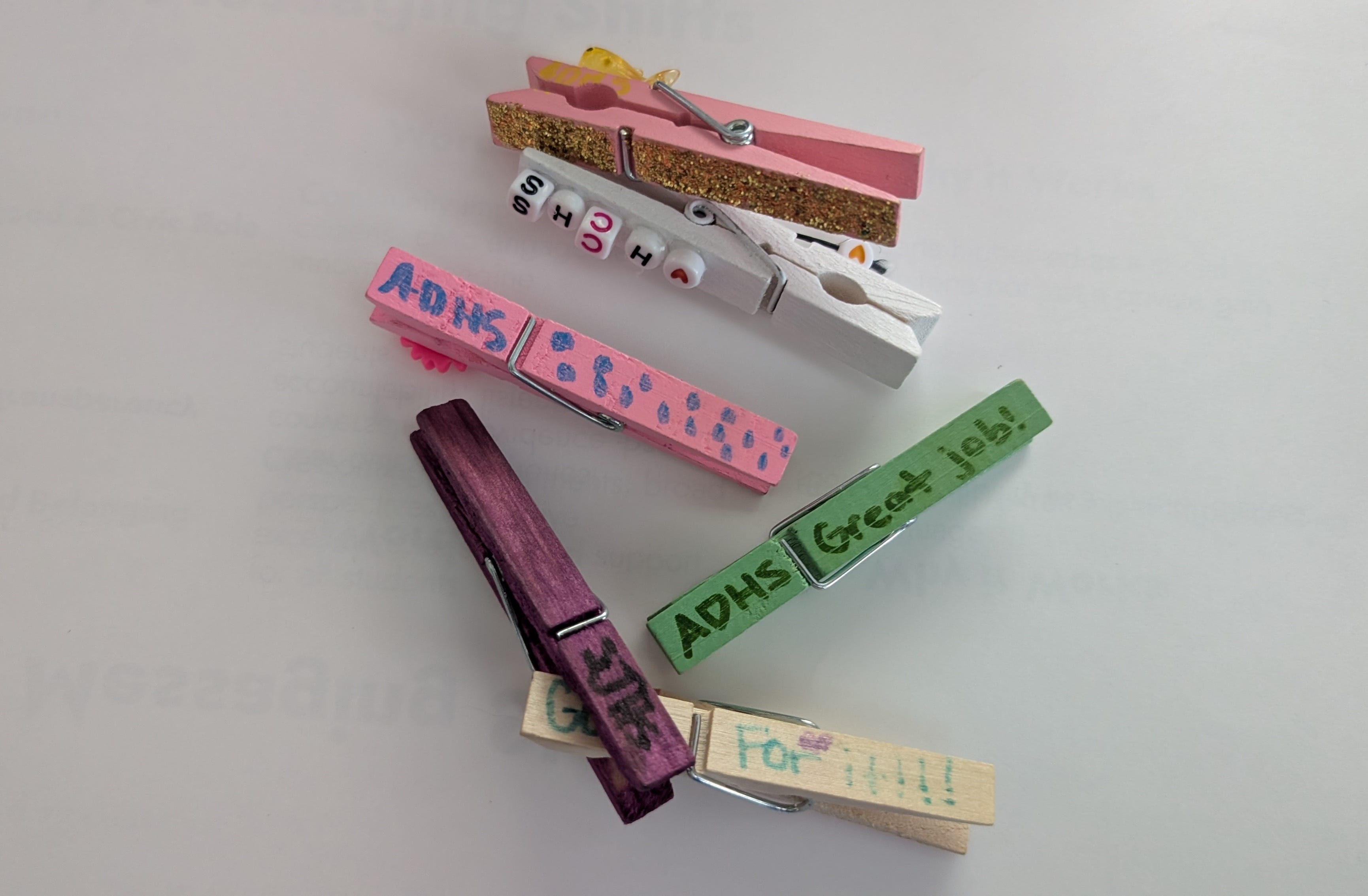
Between performances, another tradition quietly unfolds across the arena. Students trade decorated clothespins, often customized with team names, colors, or show themes, as part of a long-standing ritual known as “clipping.” Some are handed off in conversation, others are clipped onto backpacks or jackets in passing, turning a competitive environment into something more connected and communal.
At one point during the weekend, even while covering the event, a clothespin appeared on my own backpack without me noticing. It was a small moment, easy to miss, but one that perfectly captured the spirit of the activity. Participation extends beyond the floor, and everyone in the building, performer or observer, becomes part of the experience.
These exchanges, both spoken and unspoken, are where the activity extends beyond performance. Inspiration is shared in real time, friendships are formed across schools and states, and the experience becomes something participants carry with them long after the season ends.
A Pipeline That Builds Itself
One of the defining characteristics of the marching arts is its continuity. Today’s performers become tomorrow’s instructors, designers, and program leaders, creating a cycle that sustains the activity year after year.
Nearly everyone involved can point to someone who invested time in their development. That may be someone who stayed late, corrected details, or encouraged them to keep going. For McCain, that sense of responsibility is central.
“Someone gave their time and energy so I could experience this activity. Now I’m just paying that forward.”
That mindset is visible across programs of all sizes and levels, reinforcing the idea that the activity is not just about performance but about mentorship and shared investment.
More Than a Weekend
While the AIA South Championships represent a competitive milestone, they are also part of a much longer arc. Performances evolve over the course of a season, and for many groups, the work continues beyond this weekend toward larger regional or national stages.
That growth is not always measured in scores, but it becomes unmistakable in moments like these, when preparation, performance, and perspective all come together.
“You see the growth over a season, but you really feel it at an event like this,” said Chris Foster, Director of Bands at Felton Grove High School in Apex, North Carolina. “The confidence, the connection, the pride, they carry that with them long after the performance is over.”
At the same time, the impact is independent of placement. Participants leave with stronger technical skills, greater confidence, and a deeper understanding of teamwork. Just as importantly, they carry with them experiences rooted in collaboration, creativity, and personal achievement.
The Takeaway
For two days in Fayetteville, more than 100 ensembles stepped onto the floor with a shared purpose to perform, to connect, and to create something meaningful in front of an audience.
What emerged was a reminder of why the marching arts continue to resonate across generations. It offers structure and expression, competition and community, discipline and creativity, all within the same space.
In the end, the scores matter. But they are not what participants remember most.
What stays with them are the moments between performances. The conversations in the stands. The inspiration was sparked by another group’s routine. And sometimes, something as small as a decorated clothespin quietly clipped onto a backpack, unnoticed in the moment but lasting long after the weekend ends.
Those are the pieces that stay. And those are the reasons they come back.