
Raleigh, NC, Jan. 12, 2026 — Wake County officials entered the new year facing an unusually unsettled state legislative landscape, one marked less by opportunity than by risk management, cost containment, and the need to avoid becoming a target.
During today’s work session, county leadership and Wake County’s lobbyist laid out a sober assessment of what lies ahead in the General Assembly’s short session. The takeaway was not alarmist, but it was unmistakably cautionary: the normal guardrails that counties rely on, budget certainty, predictable committee processes, and respect for local authority, are increasingly unreliable.
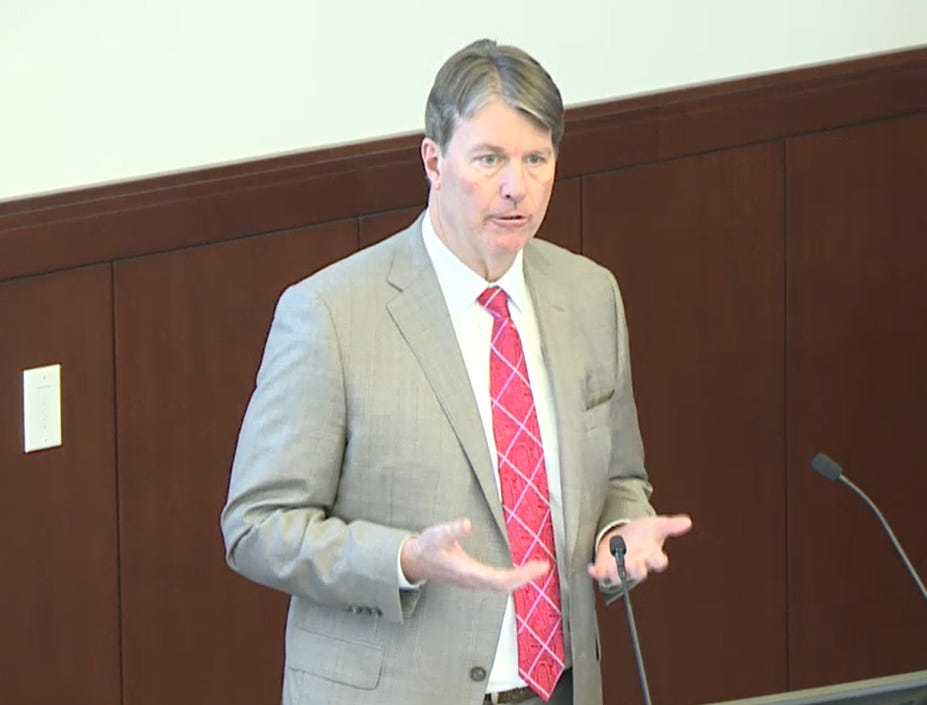
“This is all a chance to get ahead of the game on your budget process before we even formally kick that off,” Chief of Staff Ben Canada told commissioners as he opened the discussion, framing the legislative outlook alongside two other capital-intensive agenda items.
An Unusual Short Session, Without a Budget
Ordinarily, the second year of the biennium is a “short session,” designed to make limited budget adjustments and address a narrow set of issues. This year is different.
“We don’t have a budget from last year,” lobbyist Philip Isley said, noting that there is nothing to amend, tweak, or fine-tune. State law allows the previous biennium budget to remain in place, but that stability is deceptive.
“That’s not good for people who want more money, or they don’t have recurring funds,” Isley said.
Counties, in other words, may avoid disruption but still face real exposure, particularly where costs are rising or responsibilities are shifting downward from the federal government.
Isley cautioned that clarity may not emerge until after the primary elections, meaning counties could spend much of the spring navigating uncertainty with limited visibility into final outcomes.
Wake County’s Strategy: Focused, Defensive, and Disciplined
Staff reiterated the county’s long-standing three-pronged advocacy approach: general guidance, a short list of top priorities, and an opportunity list that allows staff and lobbyists to respond quickly when unexpected issues surface.
The reason for that structure, officials stressed, is simple arithmetic.
“We’re the biggest county in the state, right? We have 11% of the state’s population,” Canada said. “To us, we’re the biggest county in the state. To other stakeholders, we are one of 100.”
That reality, combined with what staff described as a shrinking political tolerance for local discretion, has pushed Wake County into a largely defensive posture.
“Unfortunately, we’re going to have to spend almost all our time playing defense,” Canada said.
Human Services Pressures and Cost Shifting
While no immediate policy changes were proposed, staff flagged mounting uncertainty around state funding for major human services programs. Federal changes have increased pressure on states, and counties are watching closely to see whether North Carolina will absorb those costs or shift them downward.
Commissioners pressed staff on timing, scale, and risk exposure. The responses emphasized that while the issue is widely acknowledged in Raleigh, there are no firm commitments and no clear timeline for resolution.
The concern, officials stressed, is not just funding levels but predictability. Counties must set budgets months in advance, even as the rules governing major cost drivers remain unsettled.
Property Taxes Under the Microscope
Some of the most cautionary remarks during the meeting focused on property taxes, specifically, a new legislative committee examining whether property taxes are too high, whether practices should be uniform statewide, and how counties and municipalities spend tax revenue.
Isley described this as a direct look at the foundation of local government finance.
“Your core governmental function right now, how you fund so many of your projects, is now under the microscope of the General Assembly,” he told commissioners.
Property taxes fund constitutionally mandated responsibilities, including public education, public safety, and health and human services. Any state-level constraints, commissioners noted, would force counties into difficult tradeoffs between service levels, staffing, and long-term planning.
Importantly, the concern is not isolated to large urban counties.
“The rurals are just as concerned about this as the big ones,” Isley said, noting rare alignment across counties of all sizes.
Unfunded Mandates and Compounding Risk
Commissioners repeatedly returned to the issue of unfunded mandates, state requirements imposed on counties without corresponding funding.
“These are not little ones,” one commissioner said, describing mandates that arrive mid-budget-cycle and carry multi-million-dollar costs.
Isley acknowledged that the issue is well understood at the legislature, even if it is not always debated publicly.
“These conversations are happening,” he said, though often outside formal committee hearings.
The risk, staff emphasized, is cumulative: new obligations layered on top of budget uncertainty and limited local revenue tools.
A More Aggressive Oversight Environment
Isley also warned commissioners about a changing tone in legislative oversight, citing recent hearings involving other local governments that were called with little notice and limited opportunity to respond.
“That’s not normal,” he said.
Wake County, by contrast, has so far avoided that spotlight.
“Nobody has popped up and made us a target,” Isley told commissioners, crediting the county’s focus on core responsibilities and disciplined governance.
Staying “above the fray and below the noise,” he said, has become less a preference and more a necessity.
The Bottom Line
The legislative outlook presented to Wake County commissioners was not about an immediate crisis, but about heightened exposure in a shifting environment.
The consistent message was restraint. Budget uncertainty, increased scrutiny of local government’s authority, and evolving state priorities all point toward a year in which protecting core functions matters more than advancing new initiatives.
No changes to legislative priorities were recommended at the meeting. Instead, staff urged commissioners to view 2026 as a year to stay focused, coordinated, and cautious, because in the current environment, drawing attention can be as risky as falling behind.
Related
Document: 2026 Legislative Outlook (click here)